
| Good manners help children show kindness, respect, and care for the people around them. Simple habits such as saying “please,” thanking someone, listening when others speak, waiting for a turn, and helping others can make everyday interactions more pleasant. Children do not learn manners all at once. They develop these skills through practice, gentle reminders, and by watching the adults around them. Good manners are also more than using polite words. They include the way children treat friends, family members, teachers, and other people in everyday situations. |
What Are Good Manners for Kids?
Good manners are polite and respectful ways of behaving with other people. They help children understand that their words and actions can affect how others feel.
For example, a child can show good manners by:
Saying “please” when asking for something
Saying “thank you” after receiving something
Saying “sorry” after making a mistake
Listening when someone is talking
Waiting for their turn
Sharing with others
Helping someone who needs assistance
Respecting other people’s personal space
Speaking kindly
Taking care of things they use
Manners are learned skills, so children need opportunities to practice them in real situations.
Why Are Good Manners Important for Kids?
Good manners are not simply about making a child look polite. They can help children develop useful social skills and build positive relationships.
When children learn respectful behavior, they can become better at:
Showing Respect
Children learn that other people have feelings, opinions, belongings, and personal space that should be respected.
Making Friends
Friendly words and considerate behavior can make it easier for children to play and communicate with others.
Communicating Clearly
Words such as “please,” “excuse me,” and “thank you” help children communicate their needs in a respectful way.
Handling Social Situations
Knowing how to greet someone, wait for a turn, apologize, or ask for help gives children practical tools for everyday situations.
Showing Kindness
Manners can become a simple way for children to show that they care about other people.
Children’s learning materials from Pakistan’s National Curriculum Council also include greetings, polite speech, kindness, sharing, turn-taking, respect, and common courtesy expressions as important social skills.
20 Good Manners Every Child Should Learn
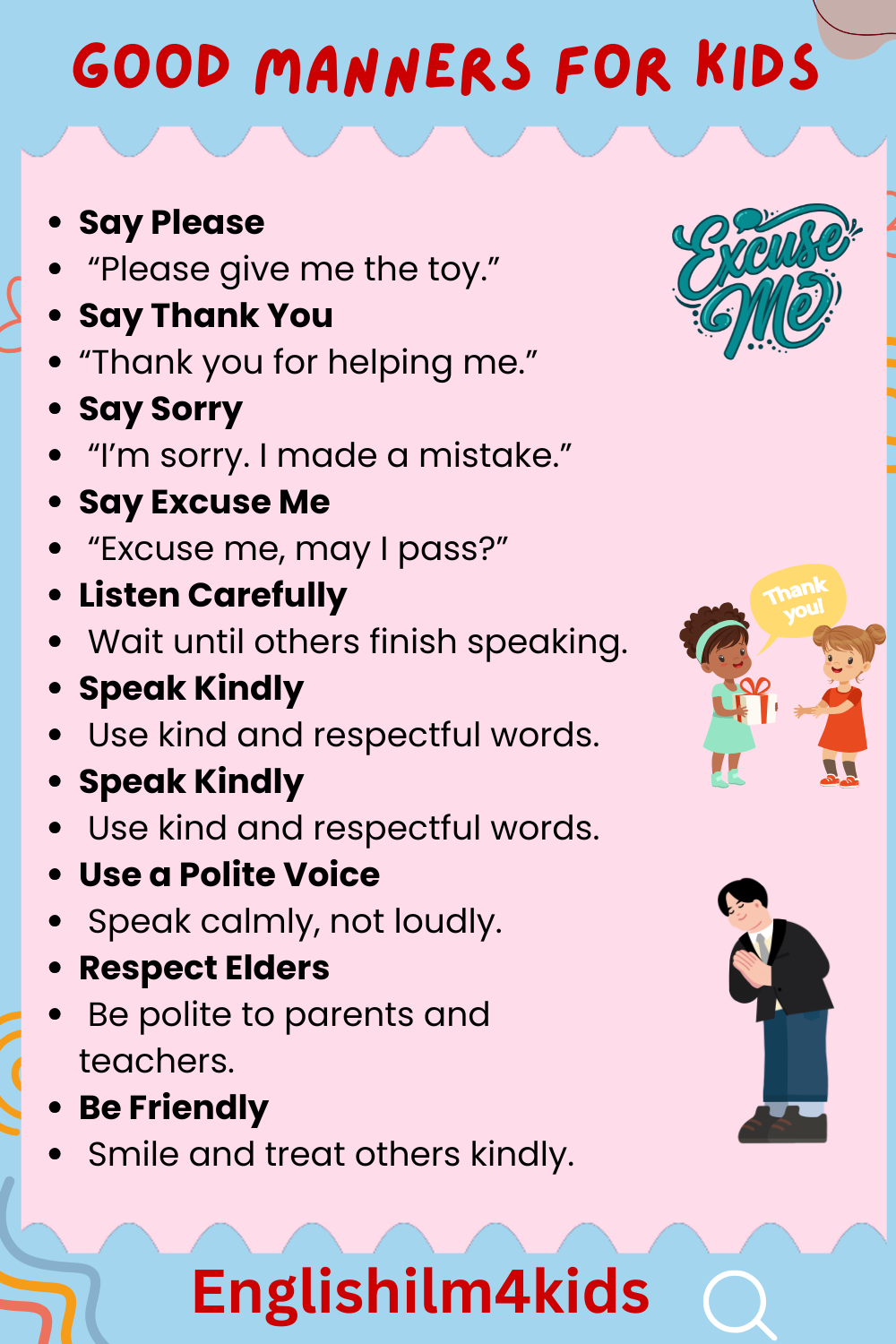
1. Say “Please”
“Please” is one of the first polite words children can learn.
Instead of saying:
“Give me the toy .”
A child can say:
“Please give me the toy.”
Using “please” turns a demand into a polite request.
2. Say “Thank You”
Children should learn to thank people when someone helps them, gives them something, or does something thoughtful.
Examples:
“Thank you for helping me.”
“Thank you for the gift.”
“Thank you for sharing.”
A simple “thank you” lets another person know that their effort was appreciated.
3. Say “You’re Welcome”
When someone says “thank you,” children can respond with:
“You’re welcome.”
Other friendly responses can include:
“My pleasure.”
“No problem.”
“Glad to help.”
For younger children, “You’re welcome” is an easy phrase to practice.
4. Say “Sorry” When You Make a Mistake
Everyone makes mistakes, including children and adults.
If a child accidentally hurts a friend or breaks something, they can acknowledge what happened and apologize.
For example:
“I’m sorry. I didn’t mean to hurt you.”
A meaningful apology should be connected to understanding what happened rather than simply forcing a child to say the word “sorry.”
5. Use “Excuse Me”
“Excuse me” is useful in many everyday situations.
Children can say it when:
They accidentally interrupt.
They need to ask a question.
For example:
“Excuse me, may I pass?”
6. Listen When Someone Is Speaking
Good manners are not only about speaking politely. Listening is also an important part of respectful communication.
Children can practice:
Looking toward the speaker when appropriate
Keeping their voice quiet while someone else speaks
Waiting until the person finishes
Asking questions after listening
Adults can model this behavior by listening patiently when children speak.
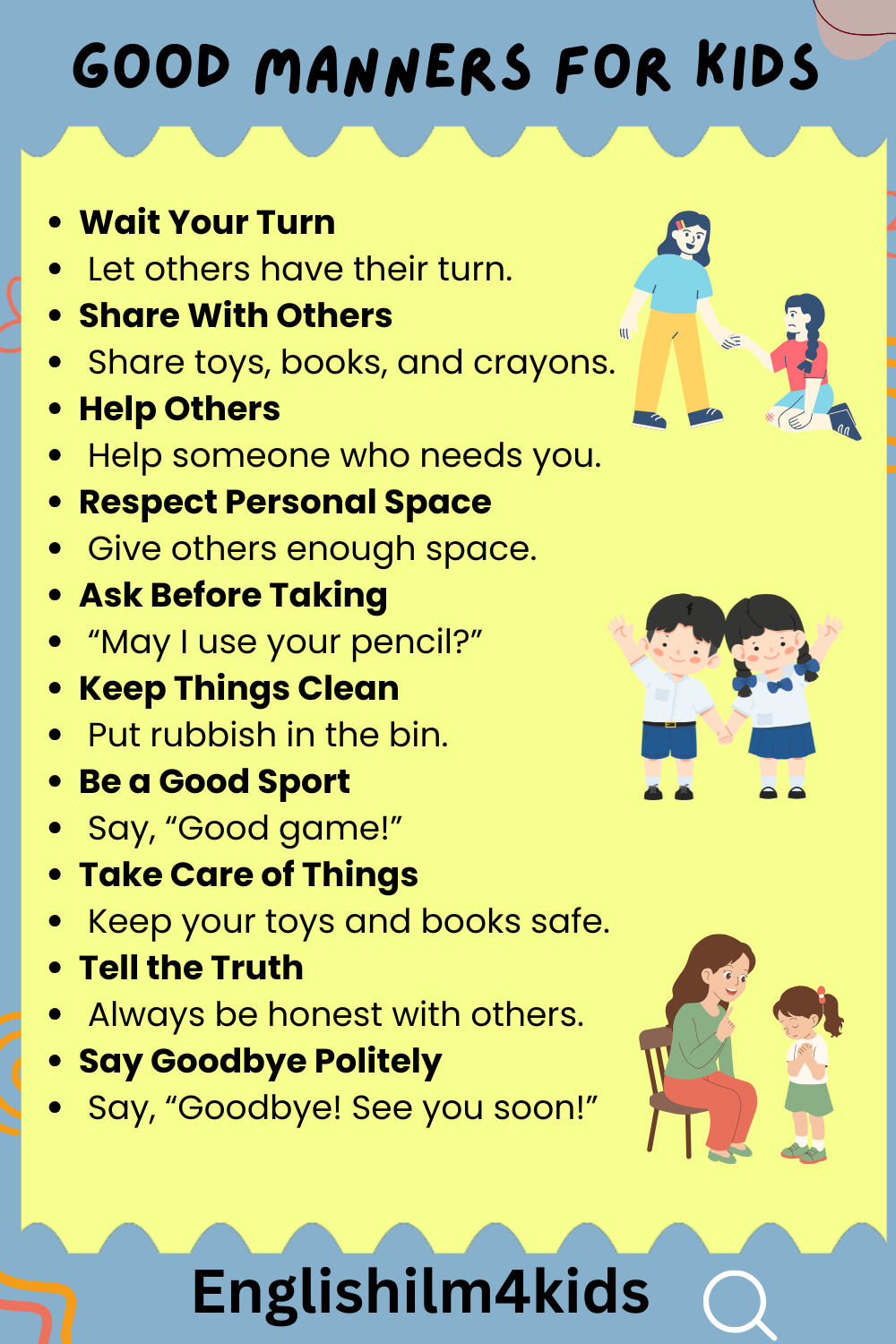
7. Wait for Your Turn
Children often want to be first, especially during games or exciting activities. Learning to wait can help them become more patient.
Teach children phrases such as:
“Is it my turn?”
or
“I can wait.”
Taking turns is useful at home, at school, and while playing with friends.
8. Share With Others
Sharing can help children learn cooperation and consideration.
For example, a child might share:
Toys
Crayons
Books
Snacks when appropriate
Playground equipment
Children should also learn that sharing does not mean they must give away everything they own. They can learn to share appropriate items while also having reasonable personal boundaries.
9. Speak Kindly
Children should learn to choose words that do not unnecessarily hurt other people.
Instead of making fun of someone’s drawing, a child could say:
“I like your picture.”
Instead of saying:
“That’s stupid.”
they can learn to express disagreement respectfully:
“I think I have a different idea.”
Kind communication helps create a friendlier environment.
10. Respect Personal Space
Everyone needs some personal space.
Children can learn to:
Ask before touching someone.
Avoid pushing.
Give people enough physical space.
Knock before entering a closed room.
Respect someone’s wish for space.
Respecting boundaries is an important part of respectful behavior.
11. Greet People Politely
A simple greeting can help children feel more comfortable in social situations.
Common greetings include:
“Hello!”
“Hi!”
“Good morning!”
“Good afternoon!”
“How are you?”
“Nice to meet you.”
Children can also learn polite ways to say goodbye:
“Goodbye!”
“See you later!”
“Have a nice day!”
12. Ask Before Taking Something
Children should understand that another person’s belongings are not automatically available to them.
Instead of taking a friend’s pencil, toy, or book, they can ask:
“May I use your pencil?”
or:
“Can I play with your toy?”
Asking first teaches respect for other people’s belongings.
13. Help Others
Good manners can include helpful actions.
A child might:
Help pick up dropped books.
Hold a door when appropriate.
Help a younger child.
Put away toys.
Help clean up after an activity.
Small acts of helpfulness can become everyday expressions of kindness.
14. Follow Rules
Rules help children understand what is expected in different places.
For example:
Follow classroom rules.
Walk safely in school hallways.
Wait in line.
Follow playground rules.
Put things back after using them.
Children can also learn that rules should be reasonable and that adults should explain why a rule exists when appropriate.
15. Keep Things Clean
Good manners include taking responsibility for shared spaces.
Children can practice:
Throwing rubbish in the bin
Washing their hands
Cleaning up toys
Returning books
Keeping their study area tidy
These simple habits show consideration for other people.
16. Use Good Table Manners
Mealtimes are a good opportunity to practice manners.
Children can learn to:
Wash their hands before eating.
Sit properly at the table.
Wait until it is appropriate to begin eating.
Ask politely for food.
Chew with their mouth closed.
Avoid criticizing someone’s meal.
Say “please” when asking someone to pass something.
Thank the person who prepared the meal.
These are commonly taught table manners for children.
17. Be a Good Sport
Games do not always end with a child winning.
Good sportsmanship means learning to handle both winning and losing respectfully.
A child can say:
“Good game!”
or
“Well done!”
They can also congratulate another player without making fun of them.
18. Tell the Truth
Honesty is an important part of good character.
Children should know that telling the truth can sometimes be difficult, but being honest helps build trust.
Parents and teachers can respond calmly when children tell the truth about mistakes. This helps children understand that honesty is valued.
19. Take Care of Other People’s Things
When children borrow something, they should try to use it carefully and return it when finished.
For example:
“Thank you for letting me borrow your book. Here it is.”
This teaches children responsibility and respect for other people’s belongings.
20. Say Goodbye Politely
Ending a conversation or visit politely is another simple social skill.
Children can say:
“Goodbye!”
“See you tomorrow!”
“See you soon!”
“Have a nice day!”
“Thank you for having me.”
These small phrases help children practice friendly communication.
Frequently Asked Questions
What are good manners for kids?
Good manners are respectful and considerate behaviors that help children communicate and interact positively with other people.
What are the most important manners for Kids?
Some basic manners include saying please and thank you, greeting people, listening, taking turns, sharing appropriately, apologizing for mistakes, respecting personal space, and using kind words.
How can I teach my child good manners?
Teach a few manners at a time, model them in everyday life, practise through real situations, and give children calm reminders and specific positive feedback.
At what age should Kids learn manners?
Children can begin learning simple manners from an early age. The specific expectations should match their developmental level, and more complex social skills can be introduced gradually.
Why are manner important for children?
Manners give children practical ways to show respect, communicate with others, cooperate, and navigate everyday social situations.
How can children practice good manner at school?
They can greet teachers and classmates, listen during lessons, wait their turn, share classroom materials, follow rules, keep spaces clean, and speak respectfully.
Should children be forced to say sorry?
It is more helpful to teach children what happened, help them understand how their actions affected someone, and guide them toward an appropriate apology or repair. The goal is understanding and responsibility rather than simply saying a word.
Final Thoughts
| Good manners are small habits that can make a big difference in a child’s everyday life. Saying “please,” listening carefully, waiting for a turn, helping others, respecting personal space, and using kind words are simple skills children can Practise every day. Parents and teachers can make learning easier by modelling respectful behavior and giving children gentle opportunities to practise. Most importantly, children do not need to be perfect. With patience, repetition, and positive guidance, good manners can gradually become a natural part of how children communicate and treat others. |
More Kids Related Articles