
Kindness is one of the most beautiful qualities a child can learn. Being kind means caring about other people, helping others, sharing, listening, and using polite words. Children learn many things at school, but learning how to be kind is just as important as learning English, math, or science. Kind and Polite Words for Kids helps children learn simple English words and sentences that they can use to show respect, care, and good manners. When children learn kind words, they also learn how to communicate with friends, teachers, parents, and other people in a positive way.
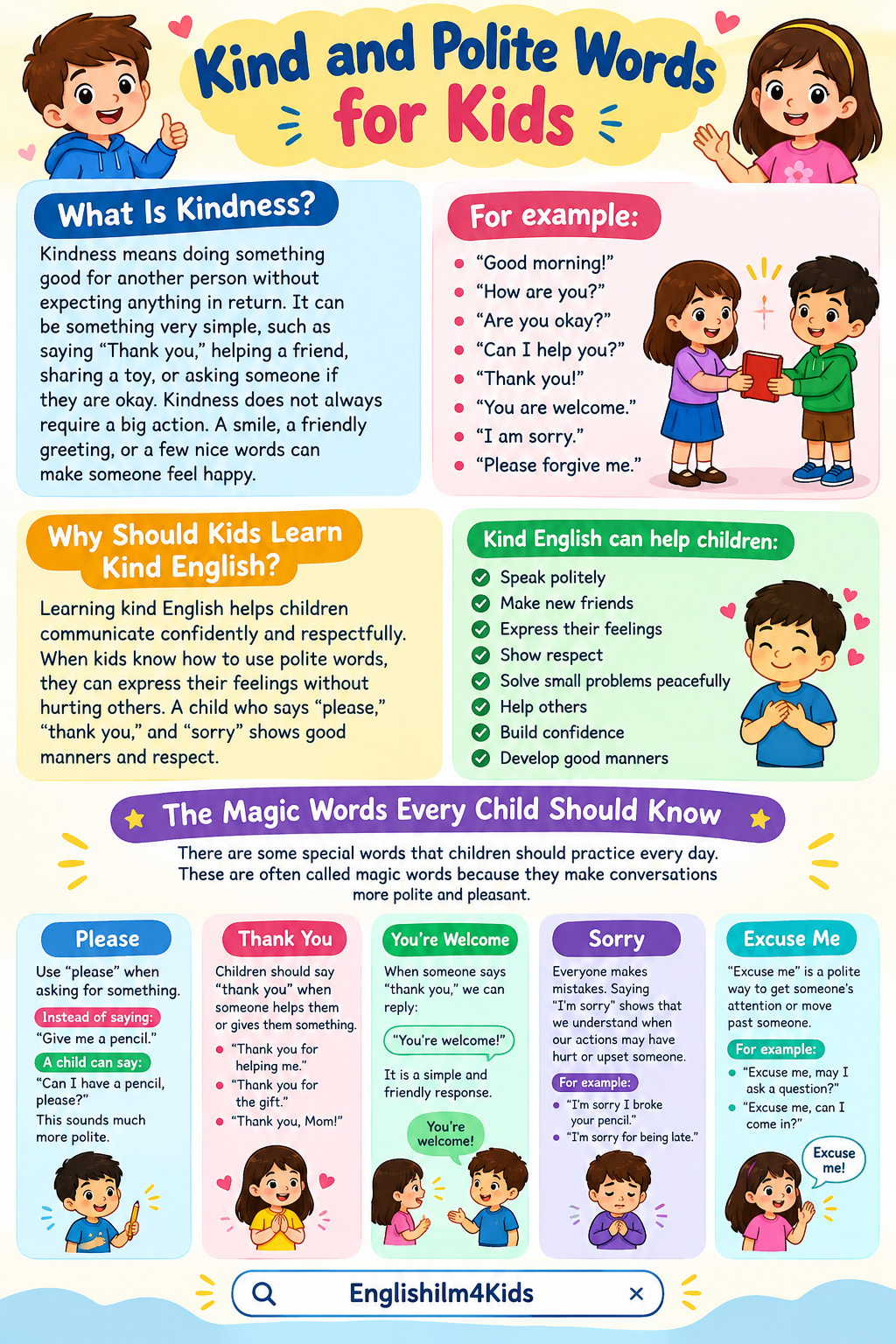
Kind and Polite Words for Kids
What Is Kindness?
Kindness means doing something good for another person without expecting anything in return. It can be something very simple, such as saying “Thank you,” helping a friend, sharing a toy, or asking someone if they are okay. Kindness does not always require a big action. A smile, a friendly greeting, or a few nice words can make someone feel happy.
For example:
– “Good morning!”
– “How are you?”
– “Are you okay?”
– “Can I help you?”
– “Thank you!”
– “You are welcome.”
– “I am sorry.”
– “Please forgive me.”
Why Should Kids Learn Kind English?
Learning kind English helps children communicate confidently and respectfully. When kids know how to use polite words, they can express their feelings without hurting others.
A child who says “please,” “thank you,” and “sorry” shows good manners and respect.
Kind English can help children:
– Speak politely
– Make new friends
– Express their feelings
– Show respect
– Solve small problems peacefully
– Help others
– Build confidence
– Develop good manners
The Magic Words Every Child Should Know
There are some special words that children should practice every day. These are often called magic words because they make conversations more polite and pleasant.
Please
Use “please” when asking for something.
Instead of saying:
“Give me a pencil.”
A child can say:
“Can I have a pencil, please?”
This sounds much more polite.
Thank You
Children should say “thank you” when someone helps them or gives them something.
“Thank you for helping me.”
“Thank you for the gift.”
“Thank you, Mom!”
You’re Welcome
When someone says “thank you,” we can reply:
“You’re welcome!”
It is a simple and friendly response.
Sorry
Everyone makes mistakes. Saying “I’m sorry” shows that we understand when our actions may have hurt or upset someone.
For example:
“I’m sorry I broke your pencil.”
“I’m sorry for being late.”
Excuse Me
“Excuse me” is a polite way to get someone’s attention or move past someone.
For example:
“Excuse me, may I ask a question?”
“Excuse me, can I come in?”
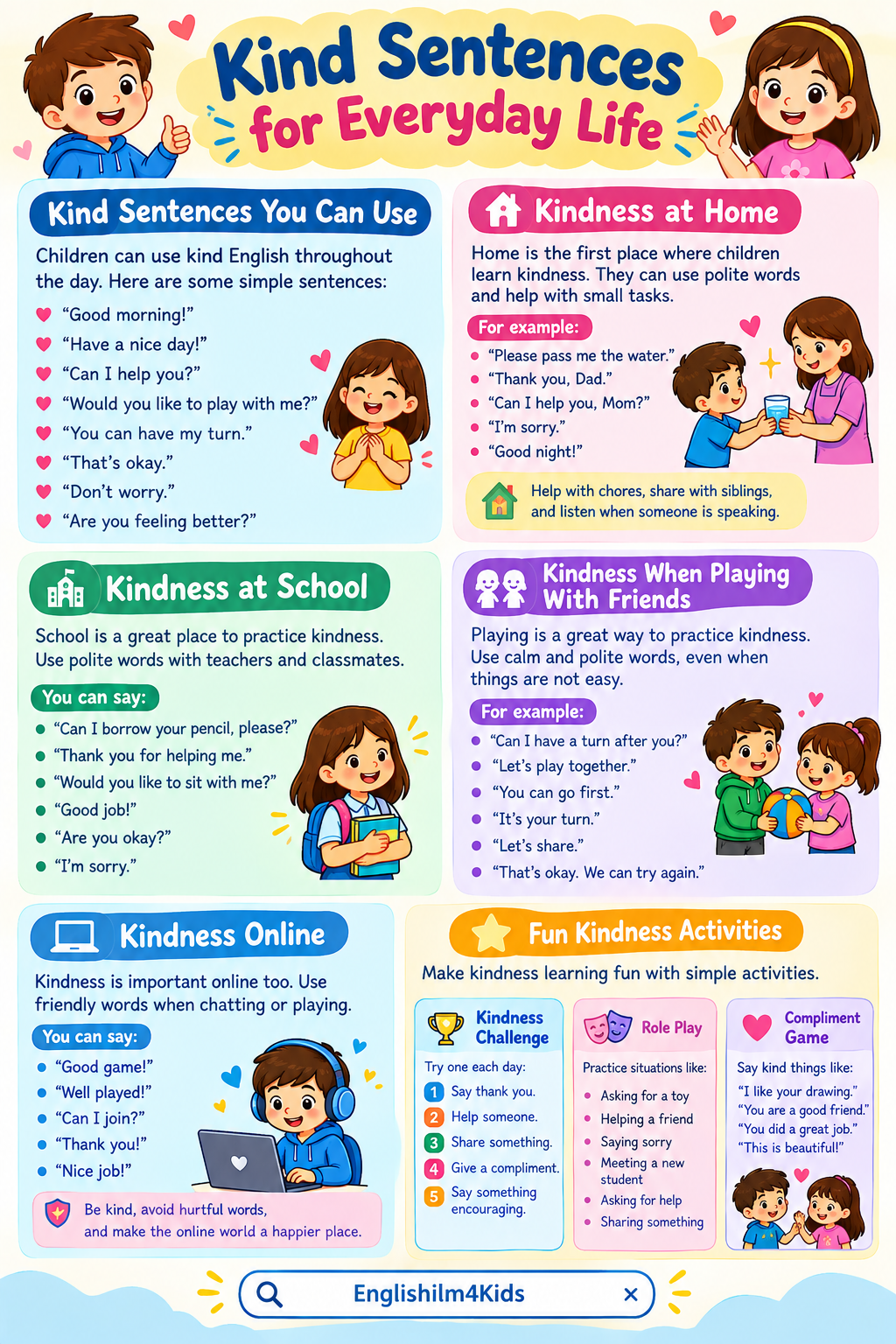
Kind Sentences for Everyday Life
Children can use kind English throughout the day.
– “Good morning!”
– “Have a nice day!”
– “Can I help you?”
– “Would you like to play with me?”
– “You can have my turn.”
– “That’s okay.”
– “Don’t worry.”
– “Are you feeling better?”
– “Well done!”
– “You did a great job!”
– “I like your drawing.”
– “Thank you for sharing.”
– “May I join you?”
– “Can we play together?”
Kindness at Home
Home is the first place where children learn kindness. Parents can encourage children to use polite English during everyday activities.
For example, children can say:
“Please pass me the water.”
“Thank you, Dad.”
“Can I help you, Mom?”
“I’m sorry.”
“Good night!”
Children can also show kindness by helping with small household tasks, sharing with siblings, and listening when someone is speaking. Parents can make learning fun by turning polite words into a daily challenge. For example, they can ask children to use the word “please” five times during the day.
Kindness at School
School is another important place for practicing kindness. Children spend time with teachers, classmates, and other students, so they have many opportunities to use kind English.
A child can say:
“Can I borrow your pencil, please?”
“Thank you for helping me.”
“Would you like to sit with me?”
“Good job!”
“Are you okay?”
“I’m sorry.”
Kind words can make the classroom more peaceful. They can also help children develop better relationships with their classmates.
Kindness When Playing With Friends
Playing is a great way for children to practice kindness. Sometimes children may disagree about toys, games, or turns. Instead of shouting, they can use calm and polite English.
For example:
“Can I have a turn after you?”
“Let’s play together.”
“You can go first.”
“It’s your turn.”
“Let’s share.”
“That’s okay. We can try again.”
Kindness Online
Children are also spending more time using computers, tablets, and other devices. Therefore, kindness is important online too. Kids should remember to use friendly words when chatting or playing online. They should never make fun of another person, use hurtful language, or send mean messages.
“Good game!”
“Well played!”
“Can I join?”
“Thank you!”
“Nice job!”
Being kind online is just as important as being kind in real life.
Fun Kindness Activities for Kids
Learning kindness does not have to be boring. Teachers and parents can use fun activities to help children practice.
Kindness Challenge
Give children a simple challenge each day.
For example:
Day 1: Say “Thank you” to three people.
Day 2: Help someone.
Day 3: Share something with a friend.
Day 4: Give someone a compliment.
Day 5: Say something encouraging.
Kindness Role Play
– Asking for a toy
– Helping a friend
– Saying sorry
– Meeting a new student
– Asking for help
– Sharing something
Compliment Game
“I like your drawing.”
“You are a good friend.”
“You did a great job.”
“This is beautiful!”
Kindness Makes the World Better
Kindness may seem like a small thing, but it can make a big difference. A kind word can make someone smile. A helping hand can make someone’s difficult day easier. A simple “thank you” can make another person feel appreciated. When children learn Kindness English, they are not only improving their English skills. They are also learning important life skills such as respect, empathy, patience, sharing, and caring.
Conclusion
Kindness English is a wonderful way to teach children both language and good manners. Simple words such as please, thank you, sorry, excuse me, and you’re welcome can help children communicate respectfully every day.
Parents and teachers can make kindness a regular part of English learning through stories, games, role plays, challenges, and everyday conversations.
Remember, children learn by watching and practicing. When we use kind words around them, they learn to use kind words too.
More Kids Related Articles