
School is a place where children learn new things, meet friends, and spend time with teachers and classmates. Being kind makes school a happier and more welcoming place for everyone. Kindness means treating others with care, respect, and understanding. Children can show kindness by sharing their supplies, helping a classmate, listening carefully, and using polite words. Learning how to be kind at school also helps children build good friendships and create positive relationships with others. Even a small act, such as smiling at a new student, can make someone feel welcome and included.
What Does It Mean to Be Kind at School?
Being kind at school means treating teachers, classmates, and other school staff with respect. It also means thinking about other people’s feelings and choosing helpful actions.
For example, you can help a classmate pick up dropped books, invite someone to join a game, or say something encouraging when a friend feels worried.
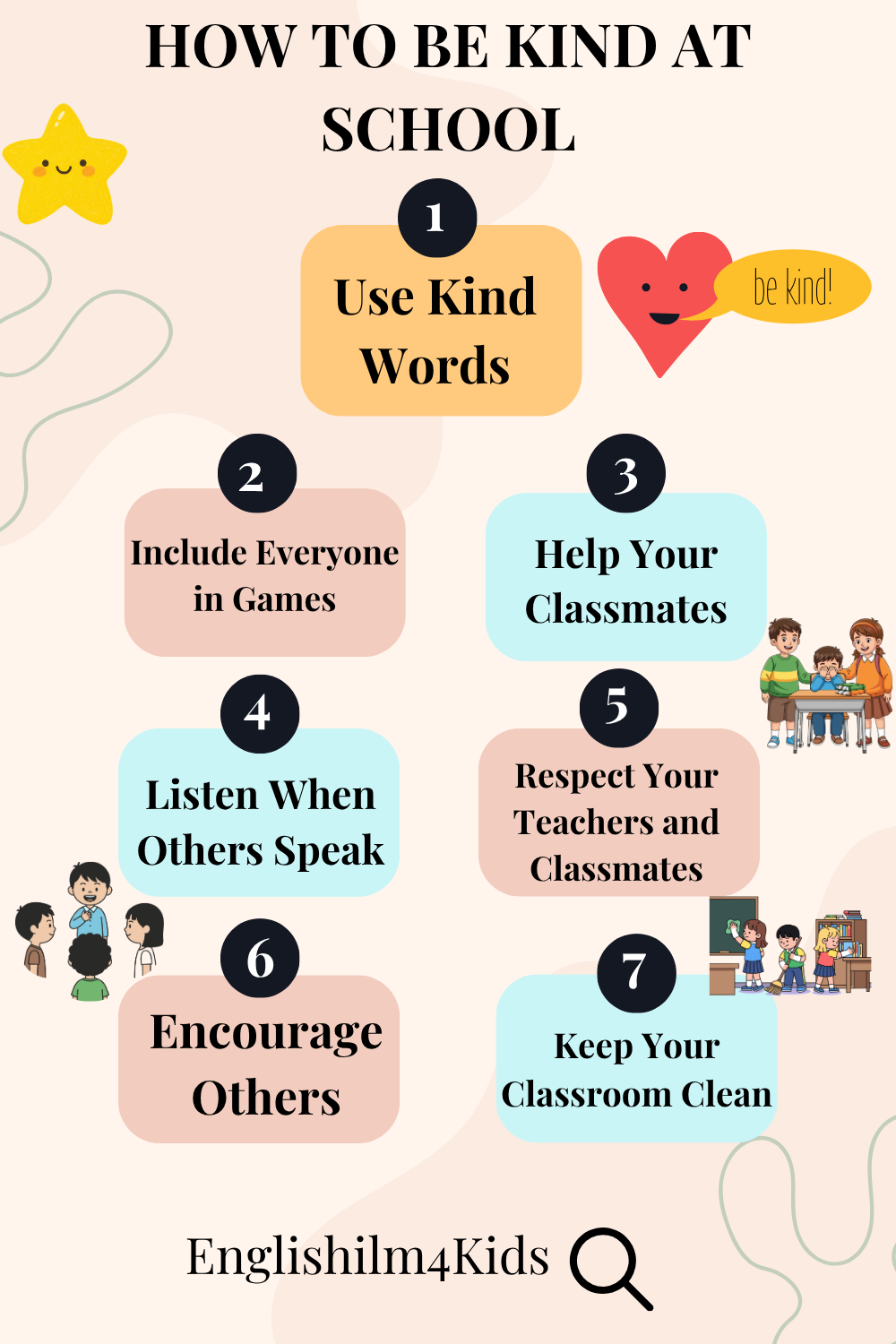
7 Simple Ways to Be Kind at School
Children can practice kindness through small actions every day.
1. Use Kind Words
Words can make people feel happy, respected, and appreciated. Speak politely to your teachers and classmates.
You can say:
- Please pass me the book.
- Thank you for helping me.
- You are welcome.
- Excuse me, may I come through?
- I am sorry for my mistake.
Avoid calling people hurtful names or laughing at their mistakes. If you disagree with someone, explain your feelings calmly.
2. Help Your Classmates
Helping others is a simple way to show kindness. If a classmate drops a pencil or cannot find a book, you can offer help.
Here are some helpful actions:
- Pick up something a classmate drops.
- Share classroom supplies when appropriate.
- Explain classroom instructions to a classmate.
- Help keep the classroom clean.
- Ask a new student if they need help finding something.
Remember, you can support a classmate without doing their homework for them. Helping someone learn is better than simply giving them the answers.
3. Include Everyone in Games
Some children may feel shy or left out during school activities. You can help them feel welcome by inviting them to play with you.
Try saying, “Would you like to play with us?” or “You can join our team.”
When playing games, take turns and follow the rules. Do not leave someone out just to make others laugh. If a game needs a certain number of players, look for a fair way to include others whenever possible.
4. Listen When Others Speak
Listening is another important way to show kindness. When a teacher or classmate is speaking, give them your attention.
You can practice good listening by:
- Waiting until the other person finishes speaking.
- Avoiding interruptions.
- Asking polite questions.
- Respecting different ideas.
- Following classroom instructions.
For example, if your friend is telling you about a problem, listen carefully instead of changing the subject. Sometimes, giving someone your attention is a helpful way to show that you care.
5. Respect Your Teachers and Classmates
Respect means treating other people fairly and recognizing that their feelings and ideas matter.
You can show respect by arriving prepared for class, following school rules, taking care of classroom materials, and speaking politely.
You should also respect differences. Your classmates may enjoy different games, have different opinions, or learn in different ways. You do not need to be exactly alike to treat one another kindly.
6. Encourage Others
Everyone makes mistakes or finds some tasks difficult. Instead of laughing at someone, offer kind and encouraging words.
You can say:
- Good try!
- You can try again.
- I believe you can do it.
- Would you like to practice together?
- Well done!
For example, if a classmate struggles to answer a question, do not make fun of them. Give them time to think and let the teacher help when needed.
7. Keep Your Classroom Clean
A clean classroom helps everyone learn in a pleasant space. Children can show kindness by taking care of shared areas and school supplies.
Put rubbish in the bin, return borrowed items, and keep your desk tidy. If you see paper on the floor, pick it up when it is safe to do so.
These small actions show that you care about your classroom and the people who use it.
Kind Words to Use at School
| Situation | Kind Words |
|---|---|
| Asking for something | Can I borrow your pencil, please? |
| Offering help | Can I help you? |
| Thanking a classmate | Thank you for helping me. |
| Welcoming a new student | Would you like to sit with us? |
| Encouraging a friend | You can try again! |
| Apologizing | I am sorry for what I did. |
| Asking to join a game | May I play with you? |
| Sharing an idea | I have another idea. What do you think? |
A Simple Example of Kindness at School
Sara notices that a new student named Emma is sitting alone during lunch.
Sara smiles and says, “Hi! Would you like to sit with us?”
Emma smiles and joins Sara and her friends. They talk about their favorite books and games.
Later, Emma drops her lunchbox. Sara helps her pick it up and asks if everything is okay.
Sara’s actions are simple, but they help Emma feel welcome. This example shows that kindness does not have to involve a big gift or a difficult task. Friendly words and helpful actions can make a difference.
What Should You Do If Someone Is Unkind?
Sometimes, children may experience teasing, hurtful words, or unfair treatment at school. Being kind does not mean accepting behavior that hurts you or someone else.
- Stay calm if you can.
- Use clear words, such as “Please stop. I do not like that.”
- Move away if you feel unsafe.
- Tell a trusted teacher, parent, or another responsible adult if the behavior continues or someone is being hurt.
- Support a classmate who is being treated unfairly by seeking help from an adult.
Do not try to handle a dangerous situation alone. Asking for help is a sensible and responsible choice.
Frequently Asked Questions
1. How can I be kind at school?
You can be kind by using polite words, helping classmates, sharing fairly, listening carefully, and respecting others.
2. Why is kindness important at school?
Kindness helps create a welcoming learning environment where students can feel respected and included.
3. What are some examples of kindness at school?
Examples include helping a classmate, welcoming a new student, sharing supplies, and encouraging someone who is having difficulty.
4. How can I be kind to a new student?
Introduce yourself, smile, show the student around when appropriate, and invite them to join an activity.
5. Can I be kind if I disagree with someone?
Yes. You can share a different opinion politely without insulting or hurting the other person.
6. What should I do if someone is unkind to me?
Set a clear boundary if it is safe, move away if necessary, and tell a trusted adult when you need help.
Read more
- How to Be Helpful: Simple Ways for Kids
- How to Be a Good Friend for Kids: Simple Tips
- How to Show Respect: Simple Lessons for Kids
- Table Manners for Kids: Simple Rules for Mealtime
- Classroom Manners for Kids: 15 Simple Rules
- Listening Skills for Kids: Simple Ways to Listen Better
- How to Solve Problems Peacefully: Simple Steps for Kids