
What Does It Mean to Be Helpful?
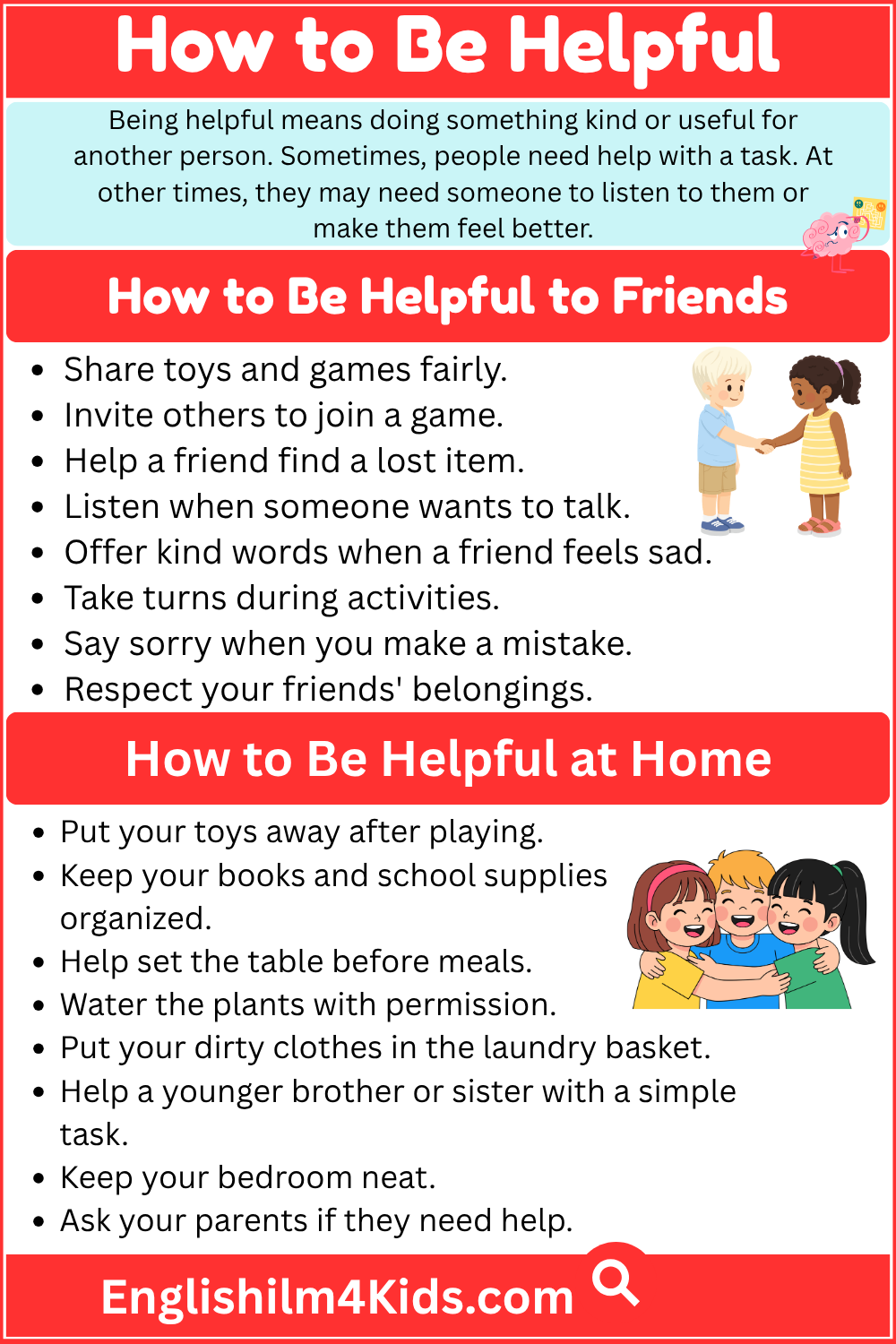
Being helpful means doing something kind or useful for another person. Sometimes, people need help with a task. At other times, they may need someone to listen to them or make them feel better.
For example, if your friend drops a pencil, you can pick it up and give it back. If your mother is arranging books, you can help her put them in the right place. These are small actions, but they show that you care about other people.
Being helpful does not mean doing everything for everyone. It means offering help when you can and choosing actions that are safe and appropriate.
How to Be Helpful at Home
Home is one of the best places for children to practice helpful habits. Parents and other family members do many things every day, and children can support them with simple tasks.
- Put your toys away after playing.
- Keep your books and school supplies organized.
- Help set the table before meals.
- Water the plants with permission.
- Put your dirty clothes in the laundry basket.
- Help a younger brother or sister with a simple task.
- Keep your bedroom neat.
- Ask your parents if they need help.
For example, imagine that you have finished playing with your toys. Instead of leaving them on the floor, you can put them back in their box. This keeps your room tidy and makes it easier to find your toys next time.
How to Be Helpful to Friends
Good friends care about each other’s feelings. They share, listen, and try to support one another. You can show helpfulness through your words and actions when playing or spending time with your friends.
- Share toys and games fairly.
- Invite others to join a game.
- Help a friend find a lost item.
- Listen when someone wants to talk.
- Offer kind words when a friend feels sad.
- Take turns during activities.
- Say sorry when you make a mistake.
- Respect your friends’ belongings.
For example, if your friend feels sad after losing a game, you can say, “That’s okay! We can play again.” Your kind words can help your friend feel better.
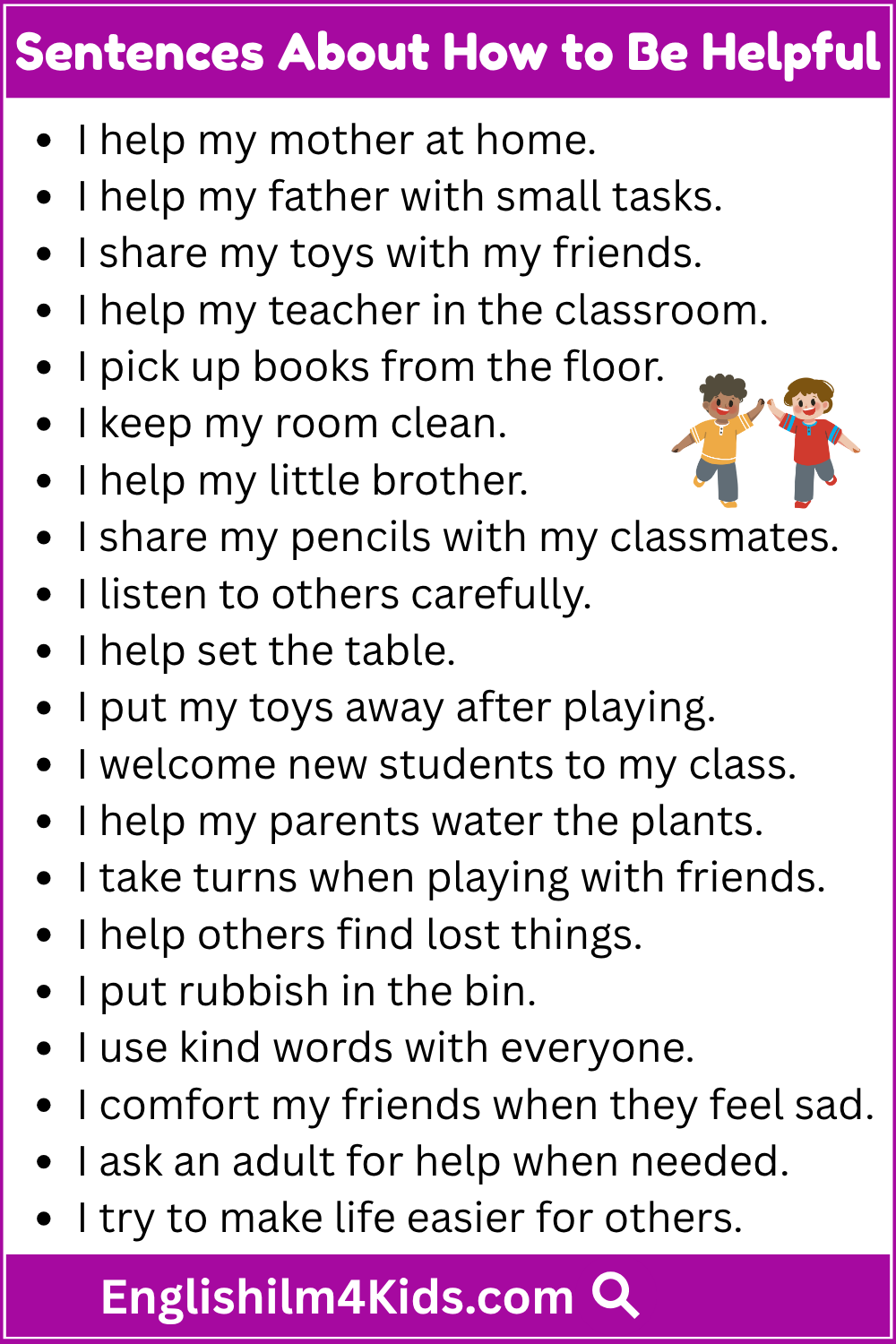
20 Simple Sentences About How to Be Helpful
- I help my mother at home.
- I help my father with small tasks.
- I share my toys with my friends.
- I help my teacher in the classroom.
- I pick up books from the floor.
- I keep my room clean.
- I help my little brother.
- I share my pencils with my classmates.
- I listen to others carefully.
- I help set the table.
- I put my toys away after playing.
- I welcome new students to my class.
- I help my parents water the plants.
- I take turns when playing with friends.
- I help others find lost things.
- I put rubbish in the bin.
- I use kind words with everyone.
- I comfort my friends when they feel sad.
- I ask an adult for help when needed.
- I try to make life easier for others.
Useful English Phrases for Helping Others
- Can I help you? — Use this when you want to offer help.
- Do you need any help? — Ask this when someone seems to need support.
- Let me help you. — Say this when you are ready to assist.
- Can you help me, please? — Use this when you need help yourself.
- Let’s do it together. — Say this when you want to work as a team.
- Thank you for helping me. — Use this to show gratitude.
- You’re welcome. — Say this when someone thanks you.
For example, if your classmate cannot find a book, you can ask, “Do you need any help?” If someone helps you carry your school supplies, you can say, “Thank you for helping me.”
Why Is Being Helpful Important for Kids?
Being helpful teaches children important lessons that they can use throughout their lives.
It teaches kindness. Children learn to notice when someone needs support and respond with care.
It builds responsibility. Simple tasks help children understand that everyone can contribute at home and school.
It improves friendships. Sharing, listening, and offering support can help children build stronger relationships.
It encourages teamwork. Helping others teaches children to cooperate and work toward a common goal.
It builds confidence. When children complete a suitable task, they can feel proud of their efforts and learn to try new things.
Children do not need to be perfect to become helpful. They can learn gradually by practicing small actions each day.
How Can Children Practice Being Helpful Every Day?
Children can make helpfulness part of their daily routine. They can start by choosing one small task to complete each day. For example, they might organize their school bag, help prepare the table, or invite someone to join a game.
Parents and teachers can encourage children by showing helpful behavior themselves. When adults help others, children can learn by watching and copying their actions.
It is also important to appreciate children’s efforts. A simple phrase such as “Thank you for helping” can encourage a child to continue practicing good habits.
Children should remember that helping must always be safe. They should not touch dangerous objects or try to handle difficult situations alone. If someone is hurt or there is a problem they cannot manage, they should ask a trusted adult for help.
ConclusionLearning how to be helpful is an important part of growing up. Children can practice this habit by helping their families, supporting classmates, and showing kindness to friends. Simple actions, such as sharing, listening, and keeping things tidy, can make everyday life better for everyone. These habits also help children develop responsibility, teamwork, and good communication skills. Remember, you do not have to do something big to make a difference. Start with one small helpful action today, and keep practicing kindness every day.
kids related articles
Pingback: How to Be Kind at School: Simple Tips for Kids - Englishilm4kids.com