
40 Vegetables Names in English
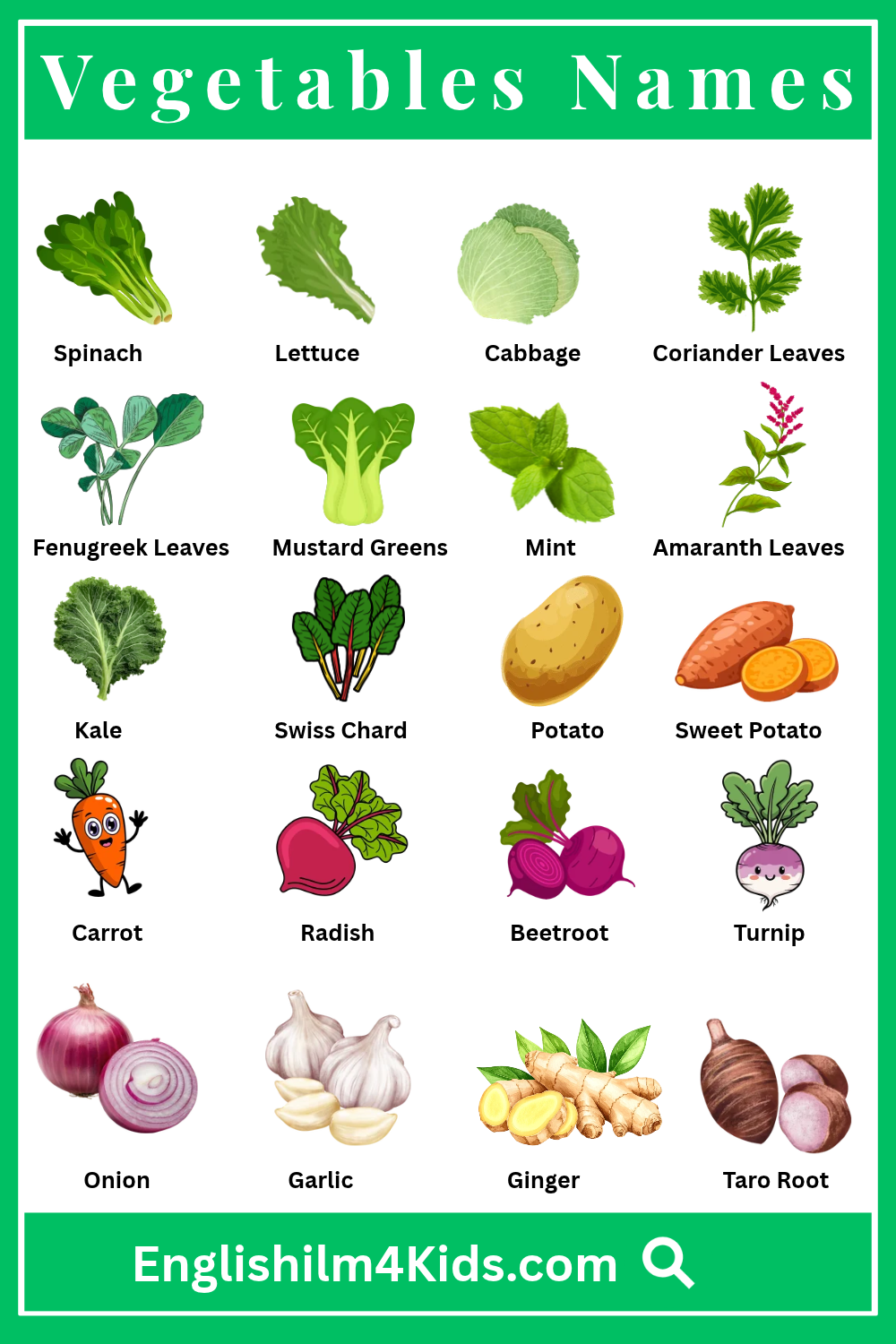
Leafy green vegetables are plants whose leaves are eaten as food. They are commonly used in salads, soups, curries, and traditional dishes. Many leafy vegetables provide vitamins, minerals, and dietary fiber.
| Vegetables Names | Health Benefit |
|---|---|
| Spinach | Provides vitamin K and folate. |
| Lettuce | Contains water and fiber. |
| Cabbage | Provides vitamin C and fiber. |
| Coriander Leaves | Adds flavor and provides vitamin K. |
| Fenugreek Leaves | Provides fiber and useful nutrients. |
| Mustard Greens | Contains vitamins A, C, and K. |
| Mint | Adds fresh flavor to meals. |
| Amaranth Leaves | Provides vitamins and minerals. |
| Kale | Contains vitamins A, C, and K. |
| Swiss Chard | Provides vitamin K and magnesium. |
Read Also [ Fruits Names in English with Meanings and Sentences ]
Root and Tuber Vegetables Names
Root vegetables grow underground, while tuber vegetables store nutrients in thick underground plant parts. They are used in many everyday meals and provide carbohydrates, fiber, vitamins, and minerals.
| Vegetables Names | Health Benefit |
|---|---|
| Potato | Provides carbohydrates for energy. |
| Sweet Potato | Contains fiber and beta-carotene. |
| Carrot | Contains beta-carotene, which the body uses to make vitamin A. |
| Radish | Provides vitamin C and fiber. |
| Beetroot | Contains folate and fiber. |
| Turnip | Provides vitamin C and fiber. |
| Onion | Contains antioxidants and useful plant compounds. |
| Garlic | Contains beneficial sulfur compounds. |
| Ginger | Contains gingerol, a natural plant compound. |
| Taro Root | Provides carbohydrates and fiber. |
Read Also [ School Things Names in English and Pictures for Kids ]
Other Common 40 Vegetables Names
This category includes popular vegetables used in everyday cooking. They come in different shapes, colors, and sizes. These vegetables can be cooked, steamed, grilled, or added to salads.
| Vegetables Names | Health Benefit |
|---|---|
| Tomato | Contains lycopene and vitamin C. |
| Cucumber | Provides water and some vitamin K. |
| Eggplant | Contains fiber and antioxidants. |
| Cauliflower | Provides vitamin C and fiber. |
| Broccoli | Contains vitamins C and K. |
| Okra | Provides fiber and folate. |
| Bottle Gourd | Contains water and some vitamin C. |
| Bitter Gourd | Provides fiber and vitamin C. |
| Pumpkin | Contains beta-carotene and fiber. |
| Ridge Gourd | Provides water and dietary fiber. |
Read Also [Body Parts Names in English with Meanings ]
Pod and Legume Vegetables Names in English
Pod and legume vegetables grow in pods. Some are eaten fresh, while others are dried and used in different dishes. Many are good sources of plant-based protein, fiber, and other nutrients.
| Vegetables Names | Health Benefit |
|---|---|
| Green Peas | Provide fiber and plant-based protein. |
| Green Beans | Contain fiber and vitamin C. |
| Broad Beans | Provide plant-based protein and fiber. |
| Chickpeas | Provide protein and fiber. |
| Lentils | Are a good source of plant-based protein. |
| Kidney Beans | Provide protein and dietary fiber. |
| Black-Eyed Peas | Contain protein, fiber, and folate. |
| Cluster Beans | Provide dietary fiber. |
| Snow Peas | Provide vitamin C and fiber. |
| Edamame | Provides plant-based protein. |
Benefits of Learning Vegetable Names in English
Learning vegetable names helps children connect English words with familiar foods. It also makes everyday conversations and vocabulary practice easier.
- Builds Vocabulary: Children learn useful English words for everyday life.
- Improves Recognition: Pictures help learners identify different vegetables.
- Supports Healthy Eating: Children become more familiar with different nutritious foods.
- Develops Speaking Skills: Learners can practice saying vegetable names aloud.
- Connects Two Languages: English and Urdu names help bilingual learners understand new words.
Easy Ways to Remember Vegetable Names
- Learn with Pictures: Look at a vegetable picture and say its English name.
- Practice at Home: Identify vegetables while helping in the kitchen.
- Use Flashcards: Write the English name on one side and the Urdu name on the other.
- Group Similar Vegetables: Learn leafy vegetables, root vegetables, and other categories separately.
- Practice Daily: Learn five new names every day and revise previously learned words.
Frequently Asked Questions
1. How many vegetable names are included in this list?
This guide includes 40 vegetable names in English and Urdu, arranged into four categories.
2. What are the most common vegetable names in English?
Some common vegetable names are potato, onion, tomato, carrot, spinach, cabbage, cauliflower, cucumber, peas, and eggplant.
5. How can children learn vegetable names easily?
Children can learn vegetable names through pictures, flashcards, matching games, and regular speaking practice.
6. Why are vegetable names useful for English learners?
Vegetable names are useful because they help learners talk about food, shopping, cooking, and everyday activities in English.
Conclusion
Learning 40 vegetable names in English and Urdu is a simple and enjoyable way to build everyday vocabulary. From spinach and carrots to potatoes, peas, and pumpkins, these familiar vegetables help children connect English learning with daily life.
Parents and teachers can use this list for reading, speaking, picture recognition, and vocabulary activities. Encourage children to look at each vegetable, say its English name, and practice remembering its Urdu name. With regular practice, they can learn new words and speak about vegetables more confidently.
Read Also