
Learning English grammar becomes easier when children learn one step at a time. Present Perfect Tense for Kids is useful when we talk about something that has already happened but is connected to the present. For example, we can say, “I have finished my homework.” Children can also learn the Present Perfect Continuous Tense to talk about an action that started in the past and is still continuing. In this article, kids will learn both tenses with simple rules, easy examples, negative sentences, and questions.
What Is Present Perfect Tense?
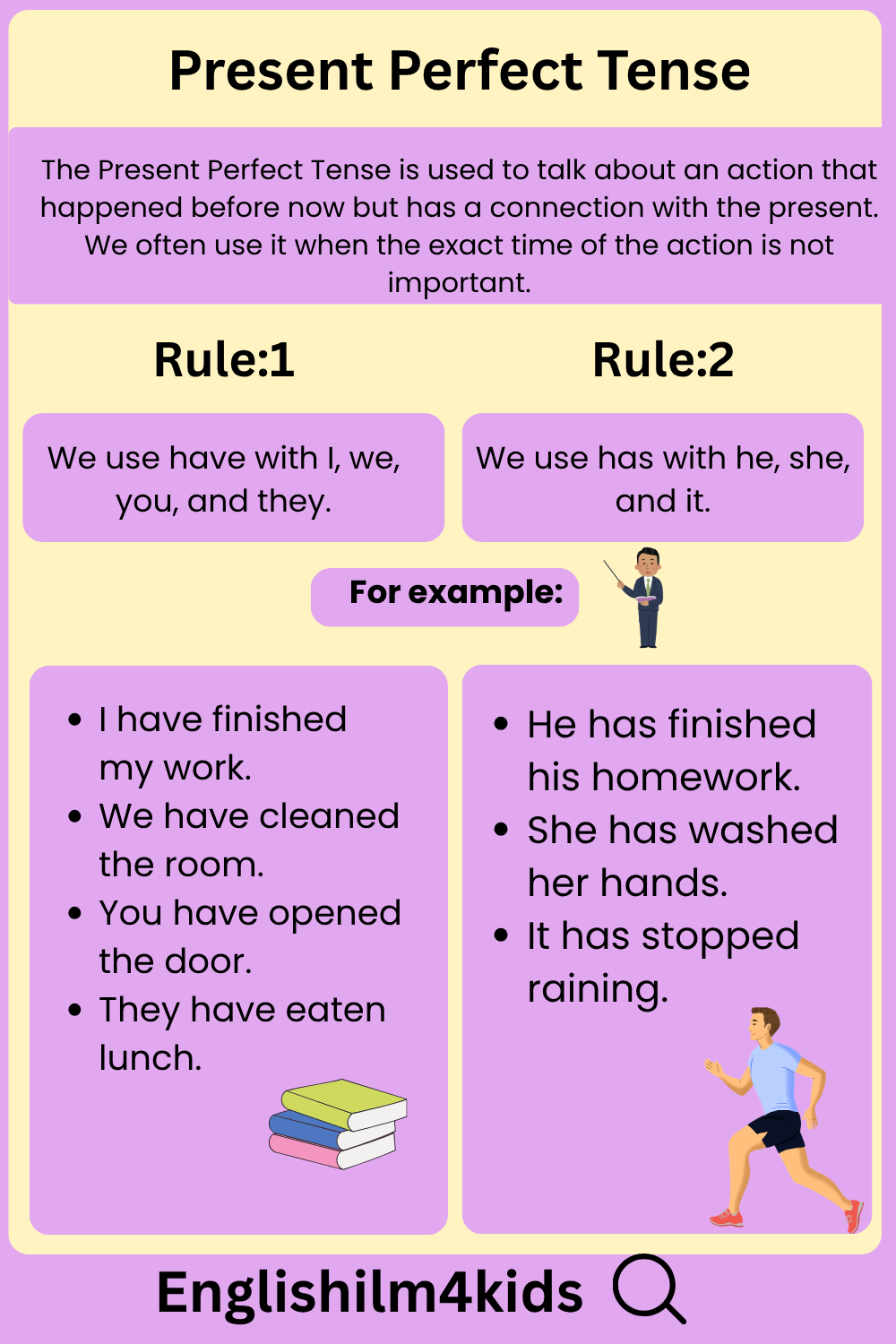
| The Present Perfect Tense is used to talk about an action that happened before now but has a connection with the present. We often use it when the exact time of the action is not important. |
For example
when a child says, “I have finished my homework,” it means the homework is complete now. Similarly, “She has eaten breakfast” tells us that she has already had breakfast.
This tense is easy to recognize because we use has or have with the past participle of the verb.
Present Perfect Tense Rule
The basic structure is:
Subject + has/have + past participle
Rule:1
|
We use have with I, we, you, and they. For example: I have finished my work. We have cleaned the room. You have opened the door. They have eaten lunch. |
Rule:2
|
We use has with he, she, and it. For example: He has finished his homework. She has washed her hands. It has stopped raining. |
Easy Examples
Here are some simple Present Perfect examples for children:
I have eaten an apple.
She has finished her homework.
He has cleaned his room.
We have watched a movie.
They have played the game.
I have opened the window.
She has washed her hands.
He has lost his pencil.
We have visited the park.
They have finished their lunch.
These examples show actions that have already happened and have a connection with the present.
Negative Sentences
| Negative sentences tell us that something has not happened. We use have not or has not before the past participle. |
For example:
I have not finished my homework.
She has not eaten lunch.
He has not cleaned his room.
We have not watched the movie.
They have not opened the door.
I have not seen the book.
She has not washed her hands.
He has not found his pencil.
We have not played the game.
They have not finished their work.
Remember that we use has not with he, she, and it. We use have not with I, we, you, and they.
For example:
She has not finished her homework.
They have not finished their homework.
Interrogative Sentences
| Interrogative sentences are used to ask questions. We put Have or Has at the beginning of the question. |
For example:
Have you eaten breakfast?
Has she finished her homework?
Has he cleaned his room?
Have they played the game?
Have you seen my book?
Has she washed her hands?
Have we finished our work?
Has he opened the door?
Have they eaten lunch?
Have you read this story?
These simple questions can help children practice the Present Perfect Tense in everyday conversations.
What Is Present Perfect Continuous Tense?
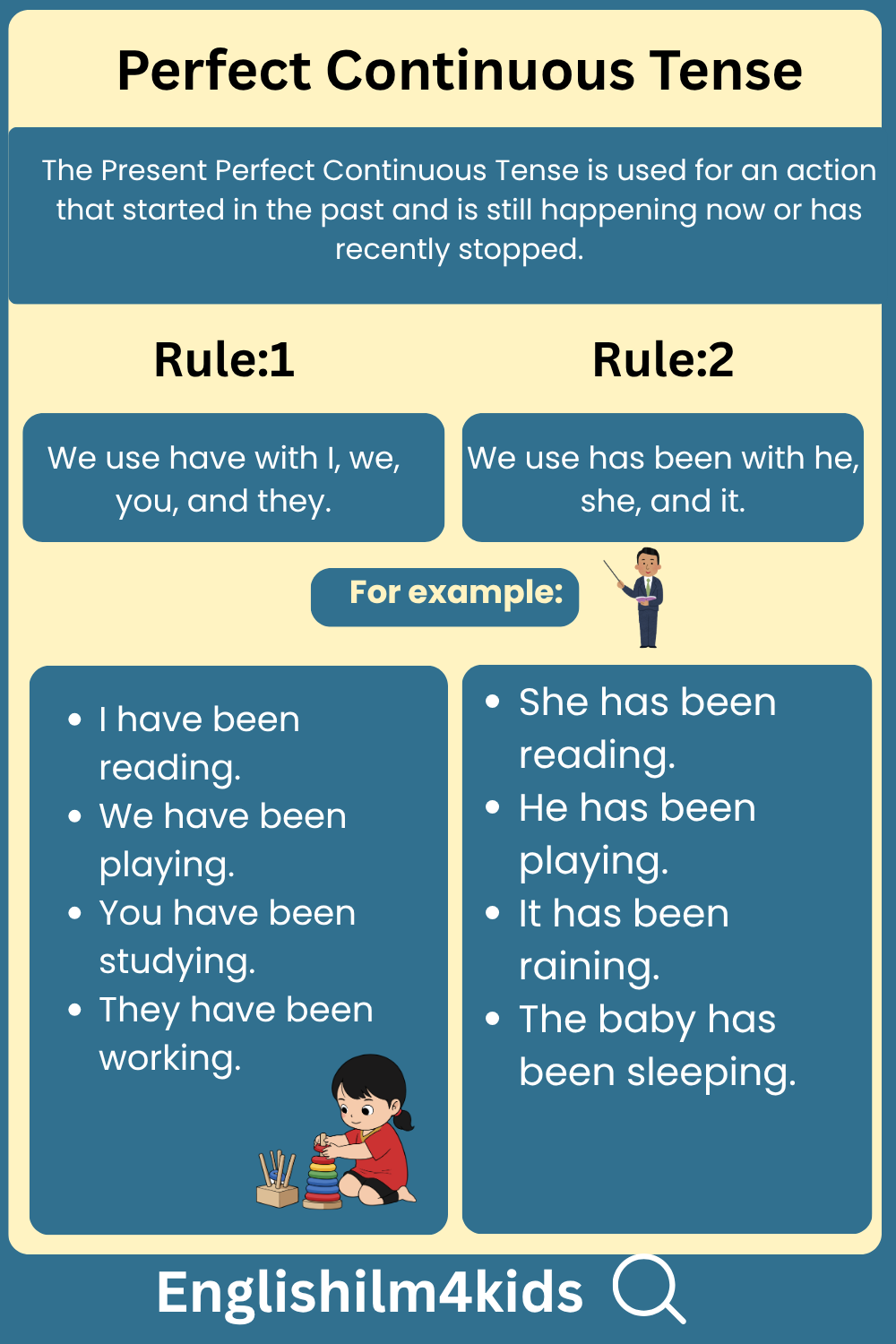
| The Present Perfect Continuous Tense is used for an action that started in the past and is still happening now or has recently stopped. |
For example, “I have been reading for an hour” tells us that the reading started earlier and continued for one hour.
We often use for when we talk about a period of time. We use since when we talk about the time when an action started.
For example:
I have been studying for two hours.
She has been playing since morning.
He has been sleeping for three hours.
They have been waiting since 9 o’clock.
Present Perfect Continuous Rule
The basic structure is:
Subject + has/have + been + verb-ing
Rule:1
|
We use have been with I, we, you, and they. For example: I have been reading. We have been playing. You have been studying. They have been working. |
Rule:2
|
We use has been with he, she, and it. For example: She has been reading. He has been playing. It has been raining. The baby has been sleeping. |
Easy Examples
Here are some easy Present Perfect Continuous examples for kids:
I have been reading a book.
She has been drawing a picture.
He has been playing football.
We have been waiting for an hour.
They have been studying since morning.
I have been writing my homework.
She has been cooking dinner.
He has been running in the park.
We have been watching TV.
They have been playing outside.
These sentences focus on an activity that started earlier and continued for some time.
Negative Sentences
To make a negative sentence, we use have not been or has not been.
For example:
I have not been sleeping.
She has not been playing.
He has not been studying.
We have not been watching TV.
They have not been running.
I have not been reading.
She has not been cooking.
He has not been working.
We have not been waiting.
They have not been playing outside.
These sentences tell us that an activity has not been happening during a period of time.
Interrogative Sentences
To ask questions in the Present Perfect Continuous Tense, we put Have or Has at the beginning.
For example:
Have you been reading?
Has she been studying?
Has he been playing?
Have they been running?
Have you been sleeping?
Has she been cooking?
Have we been waiting?
Has he been working?
Have they been watching TV?
Have you been playing outside?
These questions are useful when we want to ask how long an activity has been happening or whether someone has been doing something.
Present Perfect vs Present Perfect Continuous
The Present Perfect and Present Perfect Continuous are similar, but they focus on different things.
| Present Perfect | Present Perfect Continuous |
|---|---|
| I have cleaned my room. | I have been cleaning my room. |
| She has read the book. | She has been reading the book. |
| He has played football. | He has been playing football. |
| We have studied English. | We have been studying English. |
| They have worked today. | They have been working today. |
The Present Perfect usually focuses on a completed action or its result. On the other hand, the Present Perfect Continuous focuses more on the activity or the time it has continued.
For example, “I have cleaned my room” means the room is clean now. However, “I have been cleaning my room” focuses on the activity of cleaning.
Another example is:
“She has read the book.”
This tells us that she has completed the book.
“She has been reading the book.”
This focuses on the activity of reading and does not necessarily tell us that she has finished the book.
Using For and Since
Children may see for and since often with the Present Perfect Continuous Tense.
We use for to talk about a period of time.
For example:
I have been reading for two hours.
She has been playing for thirty minutes.
They have been waiting for an hour.
We use since to talk about when an action started.
For example:
I have been studying since morning.
She has been sleeping since 8 o’clock.
They have been playing since lunch.
A simple way to remember this is that for tells us how long, while since tells us when the action started.
Easy Practice for Kids
Let’s practice both tenses. Fill in the blanks with the correct word.
- I _____ finished my homework.
- She _____ eaten breakfast.
- They _____ been playing outside.
- He _____ been reading a book.
- We _____ cleaned the room.
- Sara _____ finished her lunch.
- I _____ been studying for two hours.
- They _____ visited the park.
- He _____ been sleeping since morning.
- We _____ finished the game.
Answers
- have
- has
- have
- has
- have
- has
- have
- have
- has
- have
Easy Tips for Learning These Tenses
Learning grammar takes practice, but it does not have to be difficult. First, children should learn the basic structure of each tense. The Present Perfect uses has or have + past participle. The Present Perfect Continuous uses has or have + been + verb-ing.
Next, children can practice short sentences about their daily activities. They can talk about things they have completed and activities they have been doing.
For example, they can say, “I have finished my work” or “I have been reading for an hour.”
Finally, practicing a few sentences every day can help children remember the rules and use these tenses with confidence.
| ConclusionLearning Present Tense for Kids becomes easier when children understand grammar through simple examples from everyday life. The Present Perfect Tense is used for completed actions connected with the present, while the Present Perfect Continuous Tense focuses on activities that started earlier and continued for some time.
With easy rules, simple sentences, and regular practice, children can understand the difference between these two tenses. Most importantly, they can learn to use them naturally when speaking and writing English. |
Read More