
Learning English grammar does not have to be difficult for children. Present Tense for Kids can be explained with simple words and everyday examples that children already use in their daily lives. For example, we use the present tense when we talk about our habits, routines, likes, and things happening around us. A child might say, “I go to school every day” or “I am reading a book.” In this guide, kids will learn the Simple Present Tense and Present Continuous Tense with easy rules and examples, so they can understand the difference and use both forms correctly.
What Is Present Tense For Kids?
| Present tense is used to talk about things that happen regularly, daily habits, general facts, and actions happening now. |
For kids, learning English grammar can be simple and fun. It is good to start with the Simple Present Tense and Present Continuous Tense. For example, these two tenses are used in many everyday sentences. Children can learn them by using simple examples from their daily lives. Also, with a little practice, they can understand when to use each tense. They can make their own English sentences and practice them every day. As a result, learning grammar becomes easier and more enjoyable for kids.
For example, “I go to school every day” tells us about a regular activity. “She likes apples” tells us about something she likes. “I am reading a book” tells us about an action happening right now.
For example
[su_note note_color=”#fef8c6″ radius=”15″]I go to school every day[/su_note]
[su_note note_color=”#e8f5f3″ radius=”10″]She likes apples.[/su_note]
[su_note note_color=”#efe8f1″ radius=”10″]He plays football[/su_note]
[su_note note_color=”#f1fad5″ radius=”10″]I am reading a book.[/su_note]
[su_note note_color=”#ffd5c0″ radius=”10″]They are playing outside.[/su_note]
1. Simple Present Tense For Kids
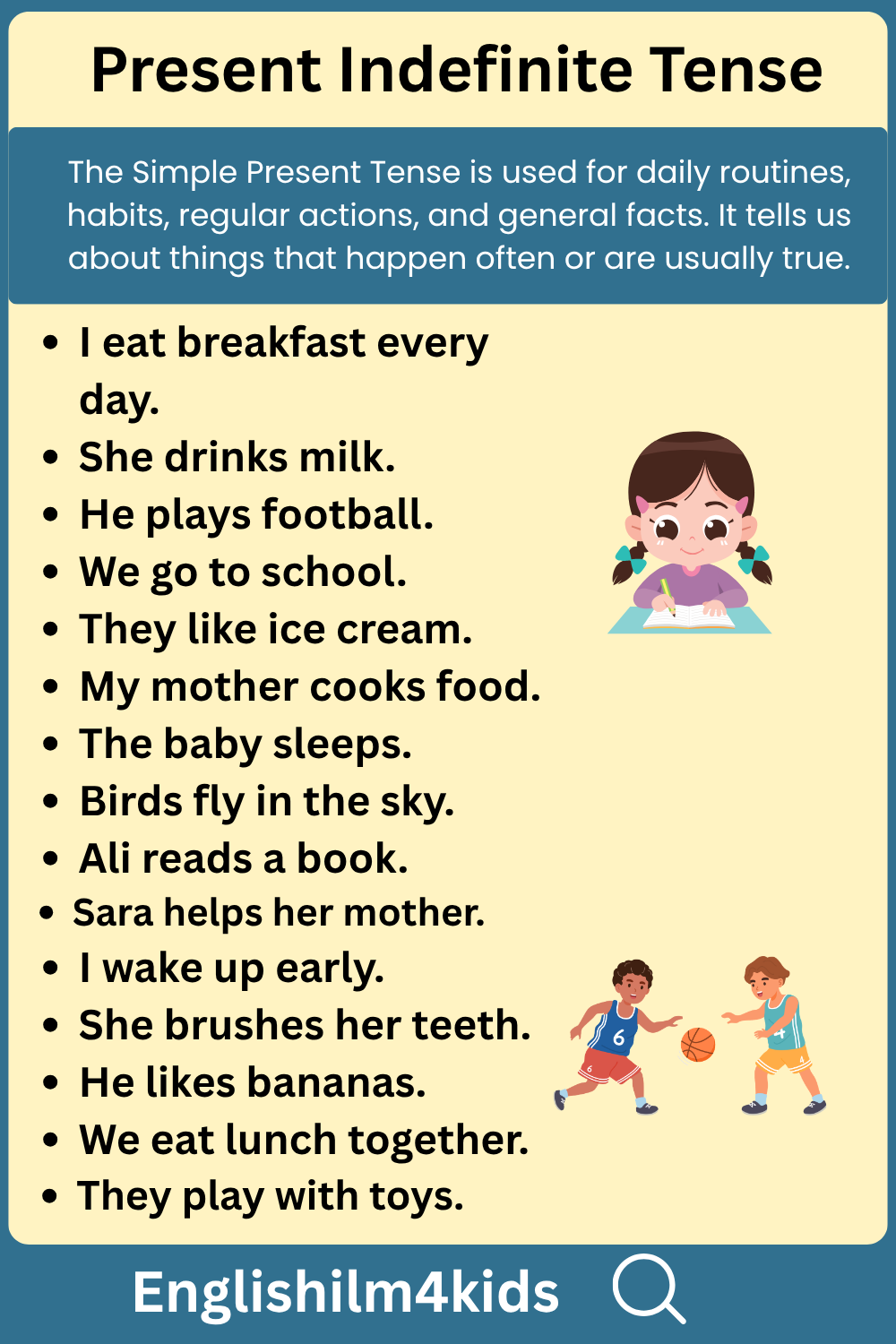
The Simple Present Tense is used for daily routines, habits, regular actions, and general facts. It tells us about things that happen often or are usually true.
Simple Present Tense Examples for Kids
🍳 I eat breakfast every day.
🥛 She drinks milk every morning.
⚽ He plays football.
🏫 We go to school.
🍦 They like ice cream.
👶The baby sleeps.
🥘 My mother cooks food.
🕊 Birds fly in the sky.
📕 Ali reads a book.
👸 Sara helps her mother.
Simple Present Tense Rules
Rule:1 With I, we, you, and they, we use the basic form of the verb. For example, we say, “I play,” “We play,” “You play,” and “They play.”
Rule: 2 With he, she, and it, we usually add -s or -es to the verb. For example, we say, “He plays,” “She reads,” “It runs,” “He watches TV,” and “She goes to school.”
Simple Present Negative Sentences
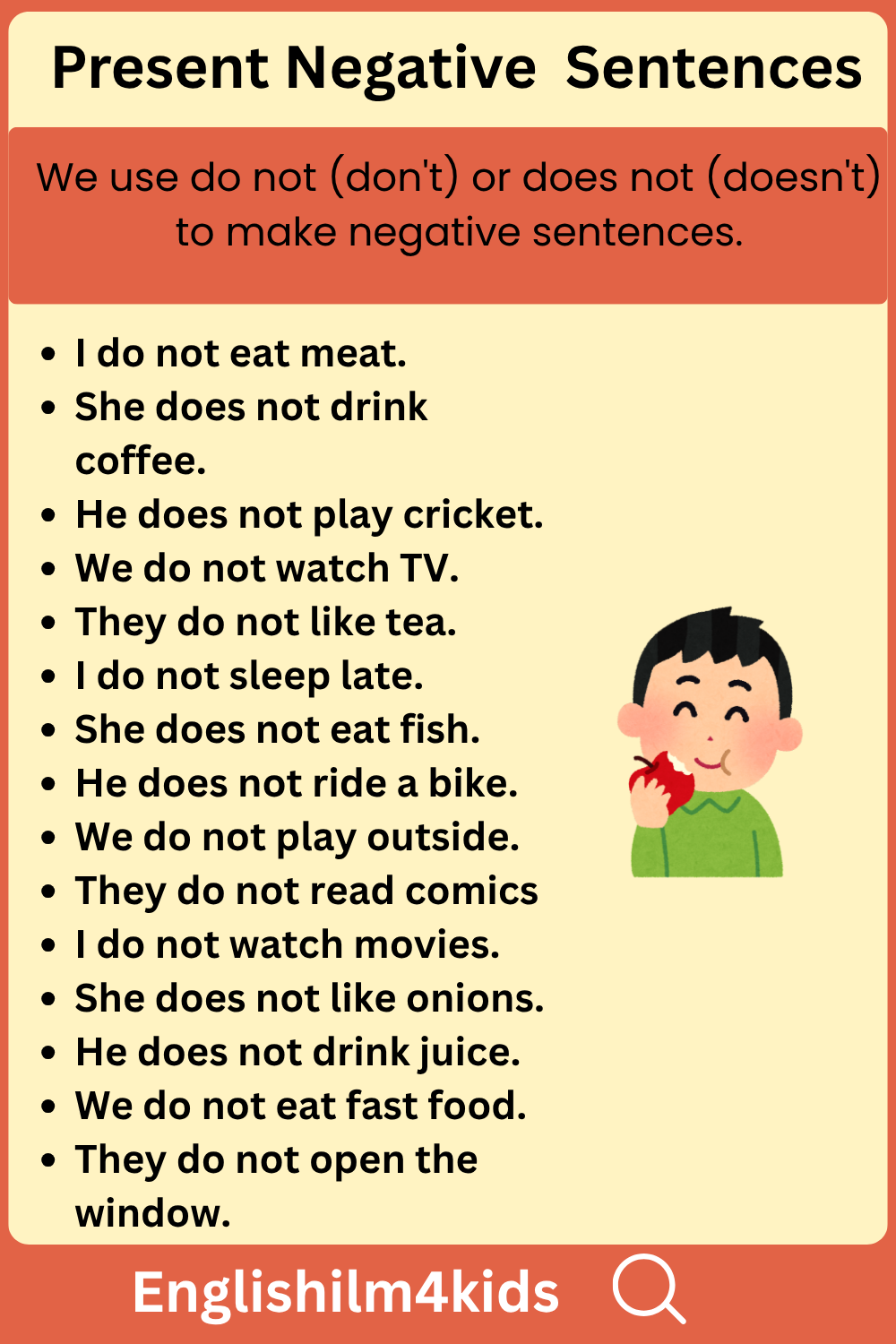
Saying :no – use do not (don’t)or does not (doesn’t) :
For example
I do not like tea.
They do not play cricket.
She does not eat fish.
He does not watch TV.
Negative sentences tell us that something does not happen or is not true. We use do not or does not to make negative sentences. These sentences help kids say what they do not do or like.
After does not, keep the verb plain: ✔She does not play football. ❌She does not plays football.
Asking questions ?
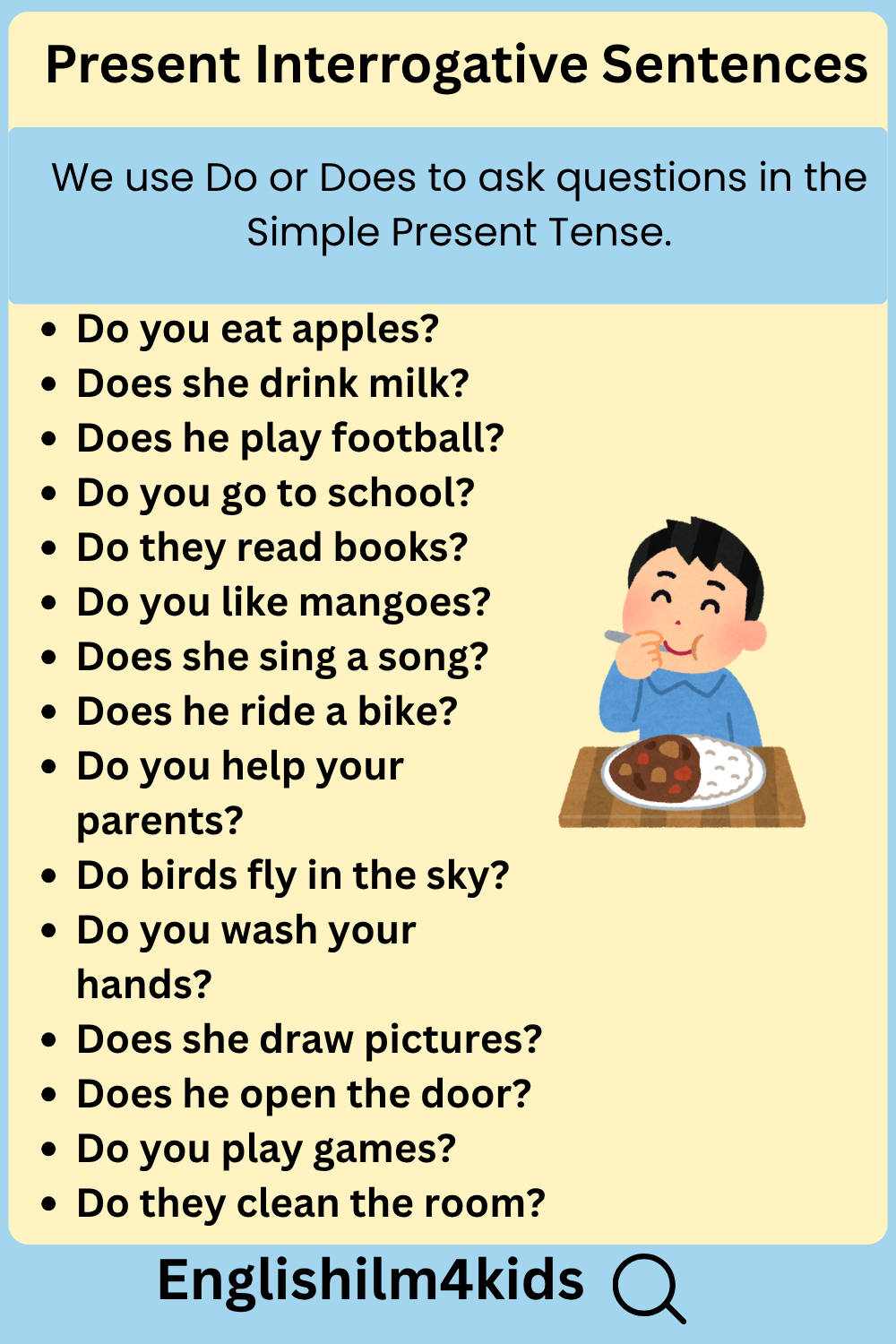
use Do (with I, we, you, they) or Does (with he, she, it):
Do you like apples?
Do they play football?
Does she read books?
“Does he go to school?
Interrogative sentences are used to ask questions. We use Do or Does at the beginning of a question. These simple questions help kids talk and practice English easily.
Present Continuous Tense
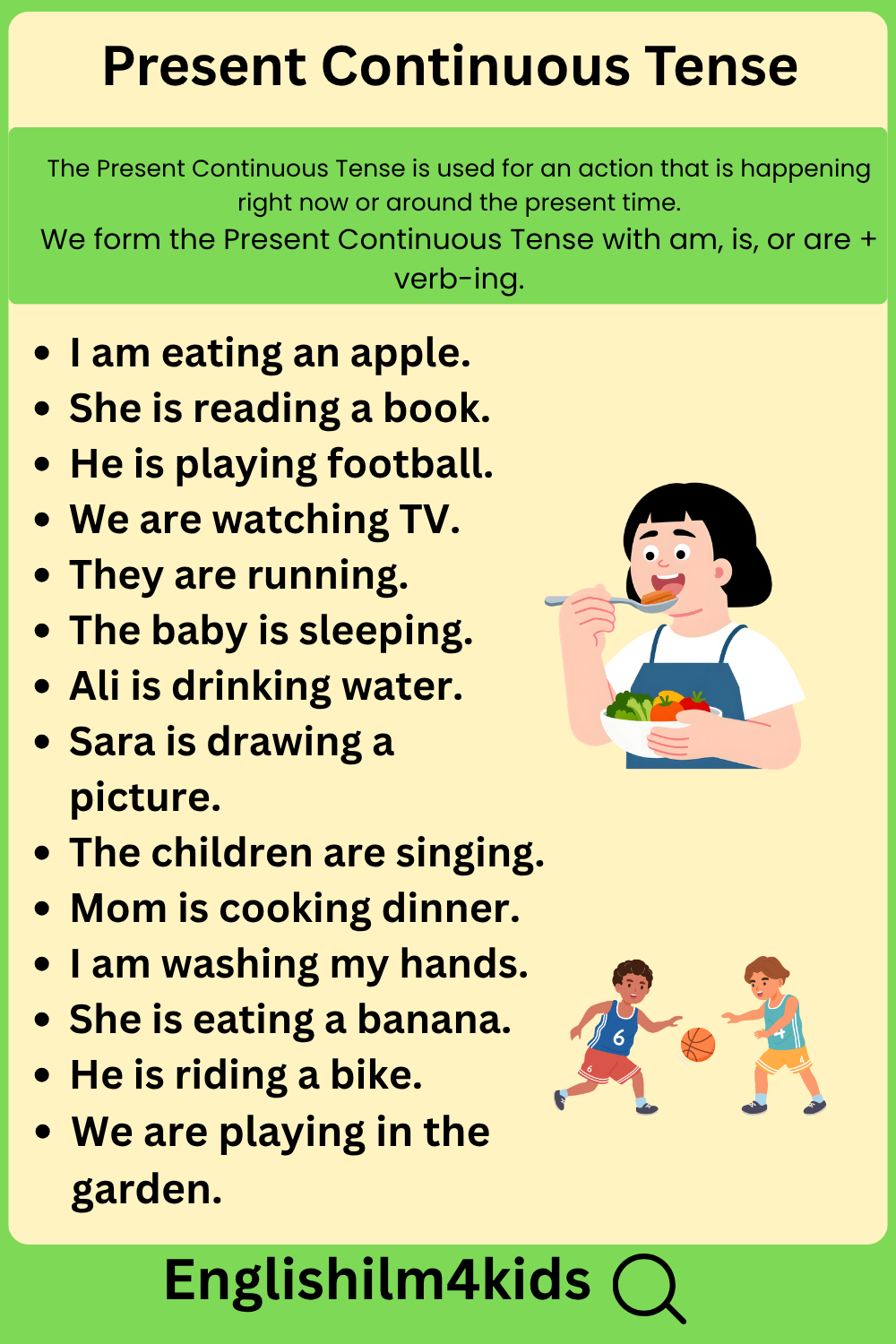
The Present Continuous Tense is used for an action that is happening right now or around the present time.
We form the Present Continuous Tense with am, is, or are + verb-ing.
Example
I am eating an apple.
They are running.
She is reading a book.
We are watching TV.
The baby is sleeping.
Ali is drinking water.
Sara is drawing a picture.
The children are playing.
The children are singing.
Mom is cooking dinner.
Present Continuous Rule
am → with | I am playing. I am reading.
is → with he, she, it She is reading. It is raining.
are → with we, you, they We are playing. They are running
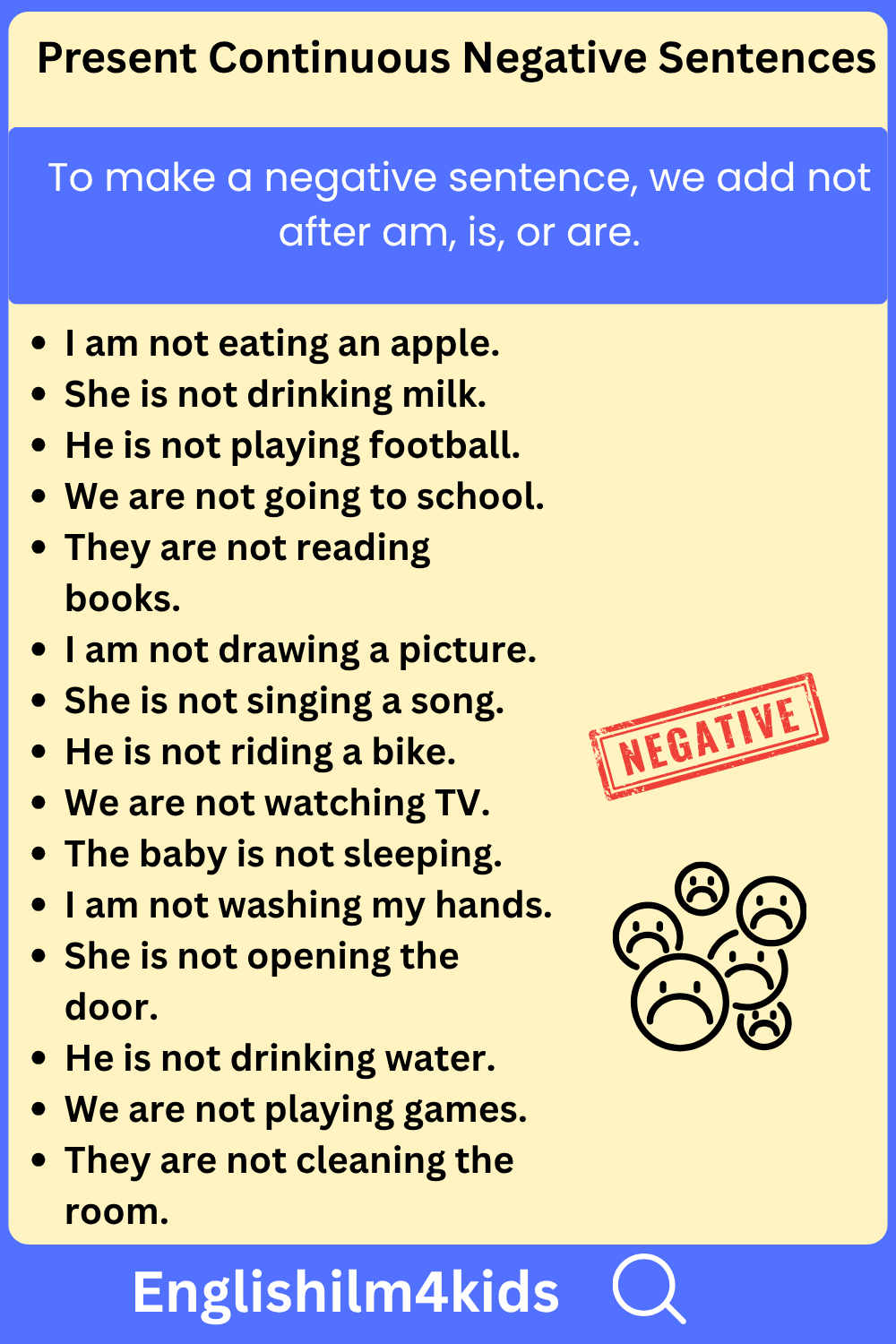
Making Negative Sentences
Saying “no” add not after am/is/are:
I am not sleeping.
She is not playing.
He is not eating.
They are not watching TV.
Negative sentences tell us that an action is not happening now. We use am not, is not, or are not to make these sentences. Kids can use them to say what someone is not doing at the moment.
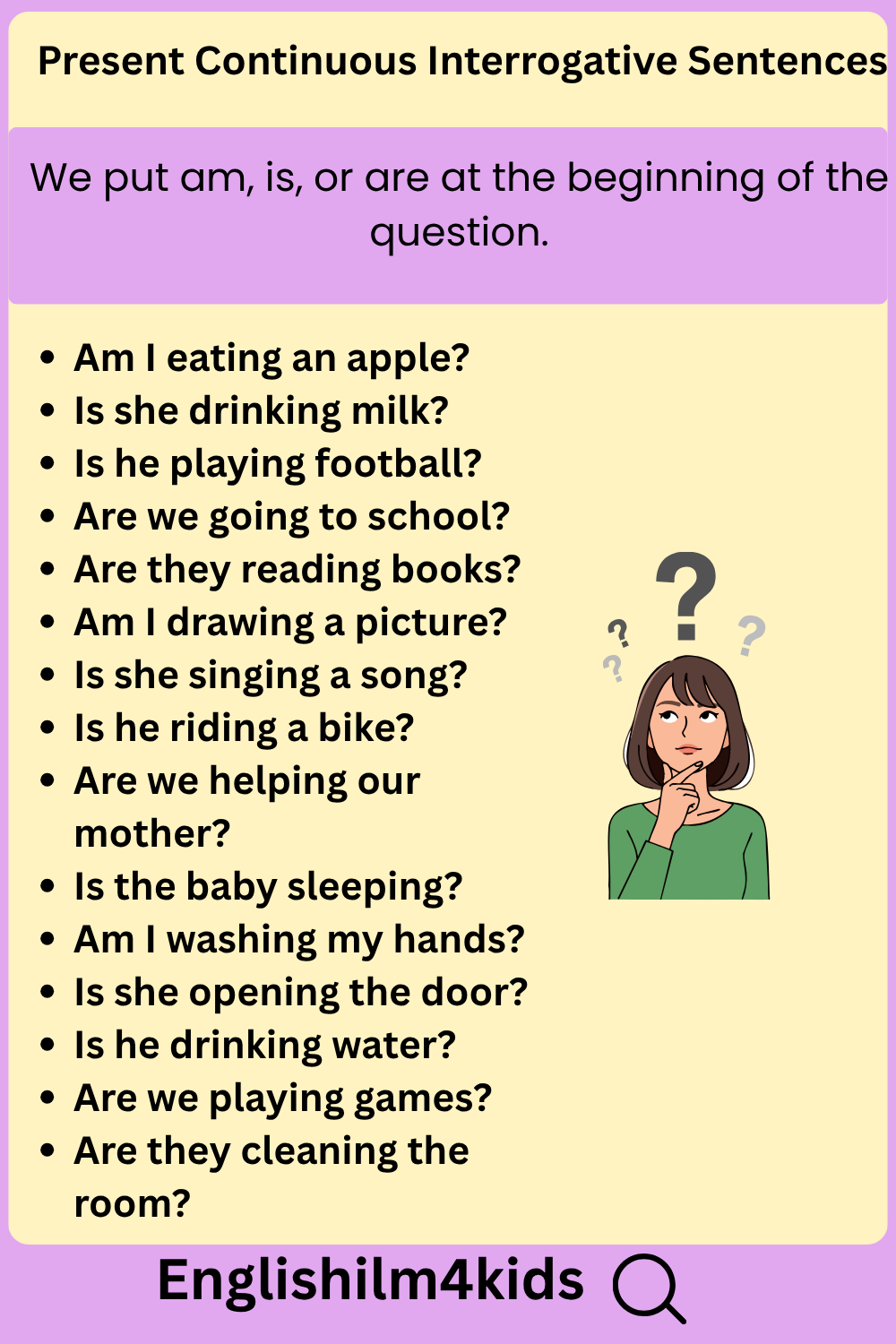
Asking questions?
put am/is/are at
Am I late?
Is she reading?
Is he playing?
Are they running?
Simple Present vs Present Continuous
Children can understand the difference between these two tenses by comparing simple examples.
| Simple Present Tense | Present Continuous Tense |
|---|---|
| I play football every day. | I am playing football now. |
| She reads books. | She is reading a book now. |
| He eats breakfast every morning. | He is eating breakfast now. |
| They play outside. | They are playing outside now. |
Practice Time
| Blanks | Answer |
|---|---|
| I __ to school every day. | go |
| She__ reading a book now. | is |
| He _ football every Sunday. | play |
| They __ playing outside. | are |
| Sara __ milk every morning. | drink |
Tips for Better Practice
Learning grammar takes practice, but it does not have to be boring. Children can practice present tense by talking about things they do every day.
For example, a child can say, “I brush my teeth,” “I eat breakfast,” “I go to school,” “I play with my friends,” and “I read a book.”
👩🏫Parents and teachers can also ask simple questions such as “What are you doing?” or “What do you do every morning?” This helps children practice both the Simple Present and Present Continuous naturally.
Conclusion
| Learning Present Tense for Kids becomes easier when children use simple sentences from everyday life. The Simple Present Tense helps kids talk about habits, routines, and regular actions, while the Present Continuous Tense helps them describe actions happening now. In addition, regular practice and easy examples can help children understand these two forms and become more confident in using English. |
Read More
Pingback: Sharing and Taking Turns for Kids: Easy Friendship Skills - Englishilm4kids.com
Pingback: Respectful Words for Kids: Simple Polite Words and Phrases - Englishilm4kids.com