
The Wolf and the Lamb is a short and meaningful fable that teaches children an important lesson about unfairness, excuses, and the misuse of power. The story is simple, but its message is very powerful. It shows how a person who wants to do something wrong may make excuses instead of telling the truth. In this story, a young lamb is peacefully drinking water when a hungry wolf comes along. The wolf wants to eat the lamb, so he tries to find a reason to blame him. The lamb politely answers every accusation, but the wolf does not care about the truth.
Story Type
- A fable
- A short moral story
- An animal story
- An educational story for kids
- A story about fairness and injustice
Short Summary of this Story
A young lamb goes to a stream to drink water. A wolf sees the lamb and decides that he wants to eat him. Instead of simply attacking the lamb, the wolf tries to find an excuse for his actions.
First, the wolf accuses the lamb of making the water dirty. The lamb explains that he is standing downstream, so he cannot make the water dirty for the wolf.
The wolf then makes another accusation. He claims that the lamb said something bad about him the year before. The lamb explains that he was not even old enough to have done that.
The wolf continues looking for reasons to blame the lamb. Finally, he stops arguing and takes the helpless lamb away.
The story shows that the wolf never wanted a fair answer. He only wanted an excuse for his cruel action.
The Wolf and the Lamb Story for Kids
The Lamb Comes to the Stream
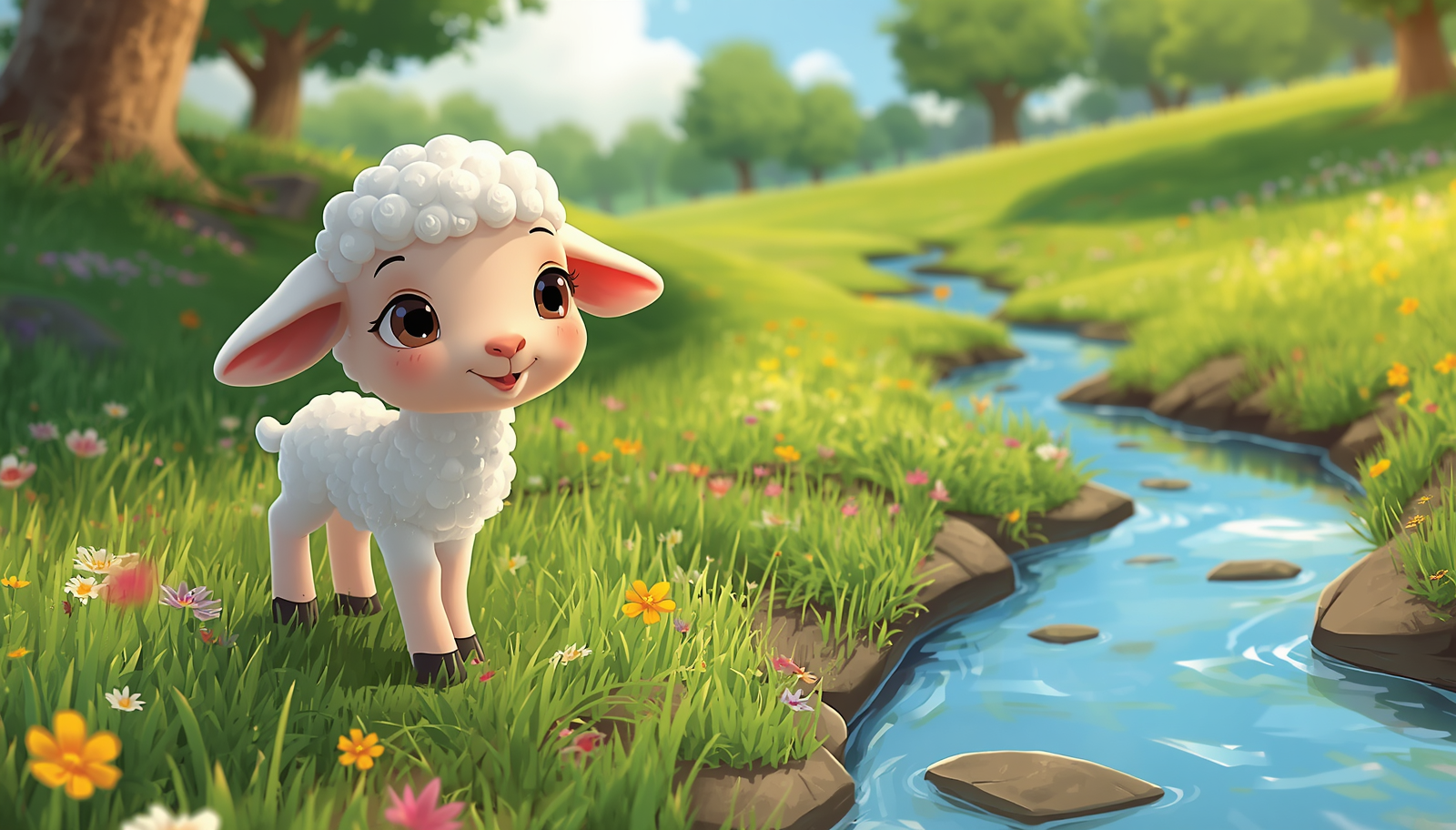
One warm day, a young lamb wandered through the countryside. The sun was shining, and the grass was green. After walking for some time, the lamb became thirsty.
Soon, he found a clear stream flowing through the meadow.
“Ah, what lovely water!” the lamb said happily.
He walked to the edge of the stream and began drinking.
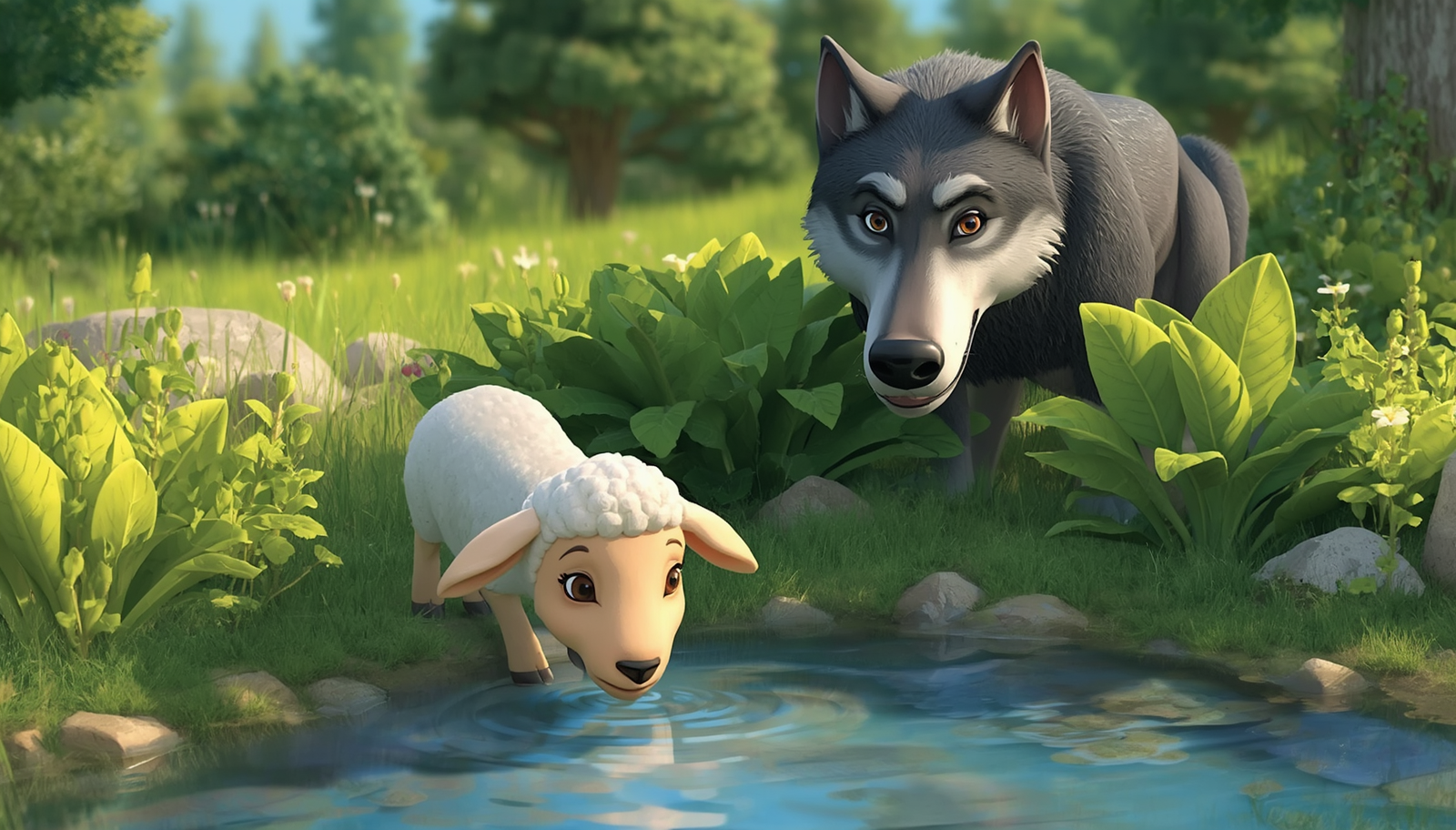
The lamb was calm and peaceful. He had no idea that someone was watching him from nearby.
Behind some bushes stood a hungry wolf.
The wolf had been looking for food all morning. When he saw the little lamb, he thought, “That lamb will make a good meal.”
The wolf slowly walked toward the stream.
The Wolf Accuses the Lamb
The wolf stopped a short distance away and shouted angrily, “What are you doing here?”
The lamb looked up with surprise.
“I am drinking some water, sir,” he replied politely.
The wolf frowned.
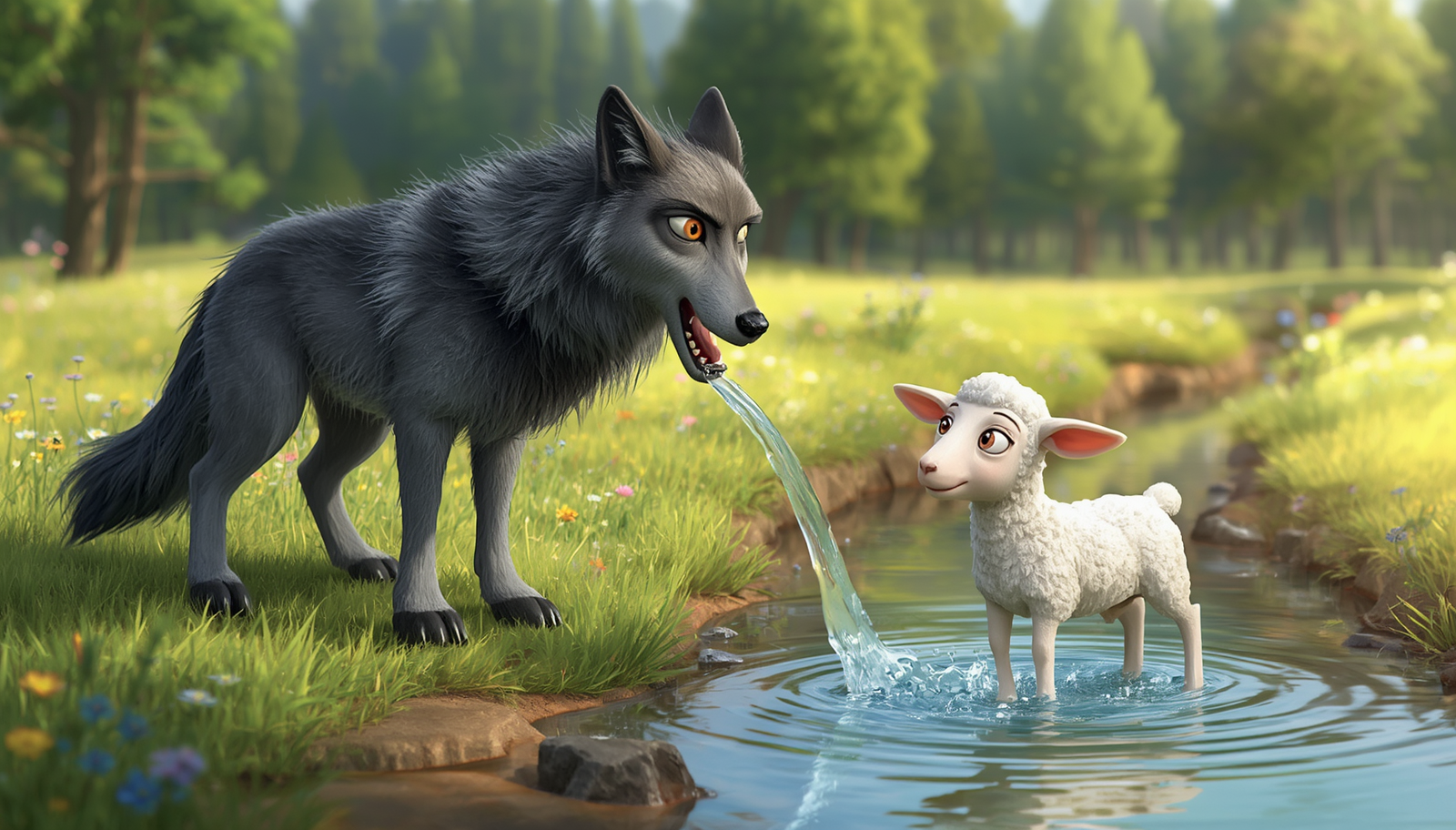
“You are making my water dirty!” he said.
The lamb looked at the stream and then at the wolf.
“I’m sorry, but how can I make your water dirty?” he asked. “You are standing upstream, while I am drinking downstream. The water flows from you toward me.”
The wolf had no good answer.
For a moment, he was quiet.
But he did not give up.
The Wolf Makes Another Excuse
The wolf growled, “Well, perhaps the water is not the problem. But I remember that you spoke badly about me last year!”
The little lamb became frightened.
“Last year?” he asked.
“Yes!” shouted the wolf. “You said terrible things about me.”
The lamb shook his head.
“Sir, that cannot be true. I was not even old enough to speak about you last year.”
The wolf became annoyed.
He had expected the lamb to be unable to answer.
Instead, the lamb had given him a sensible explanation.
The Wolf Continues to Blame the Lamb
The wolf thought for a moment.
“If it wasn’t you,” he said, “then it must have been your brother.”
“I don’t have a brother,” answered the lamb.
“Then it was another lamb from your family!”
“No, sir,” the lamb replied nervously. “I don’t think anyone from my family would say such things.”
The wolf became more impatient.
“You always have an answer!” he shouted.
The lamb lowered his head.
“I am only telling you the truth,” he said.
The Lamb Tries to Reason with the Wolf
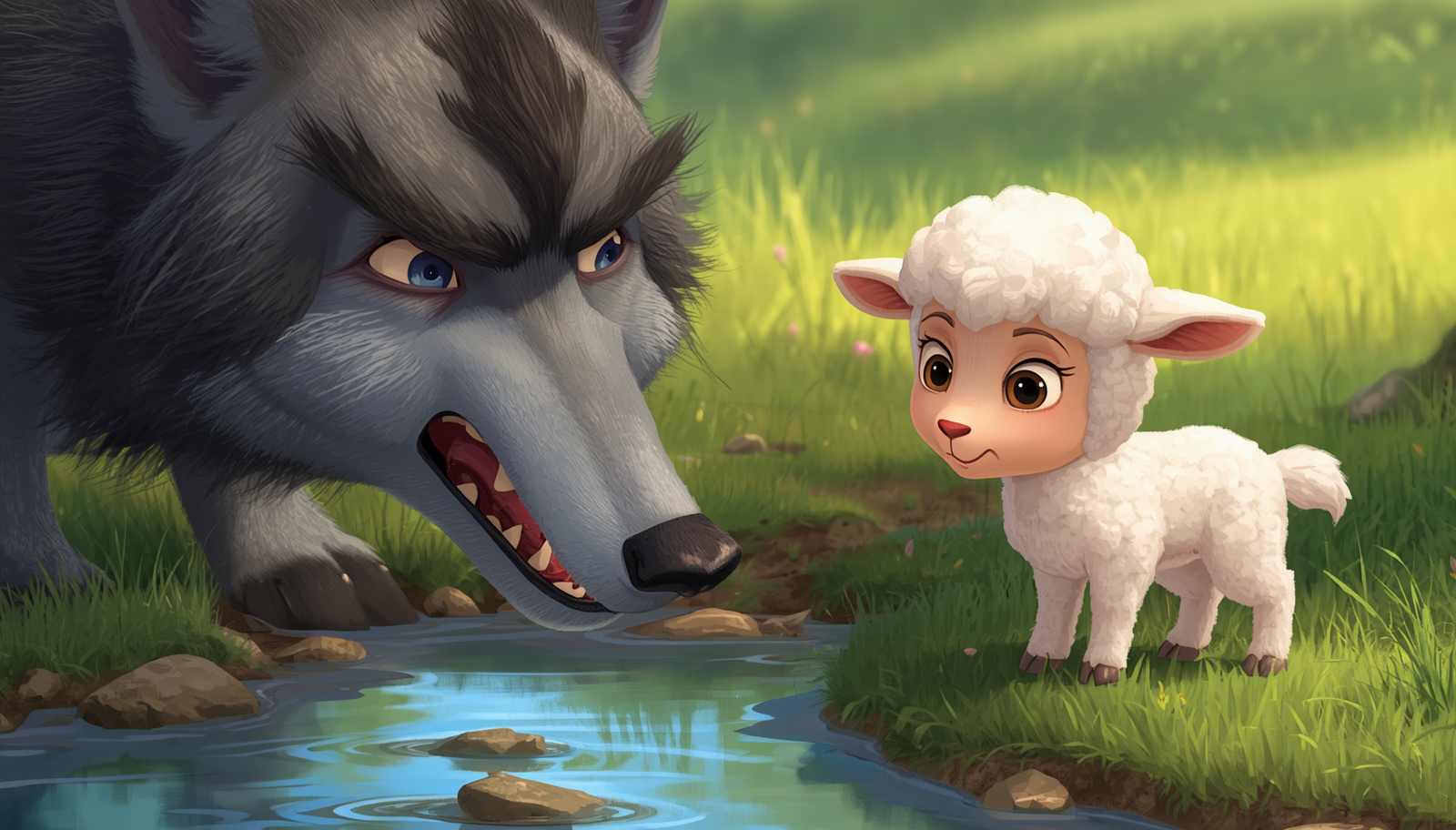
The lamb could see that the wolf was angry, but he still hoped that the wolf might listen.
“Sir,” said the lamb, “if I have done something wrong, please tell me what I did. I will listen.”
The wolf stared at him.
But he had no real evidence.
The lamb had not made the water dirty. He had not insulted the wolf. He had not done anything to hurt him.
The wolf knew this.
Still, he had already decided what he wanted to do.
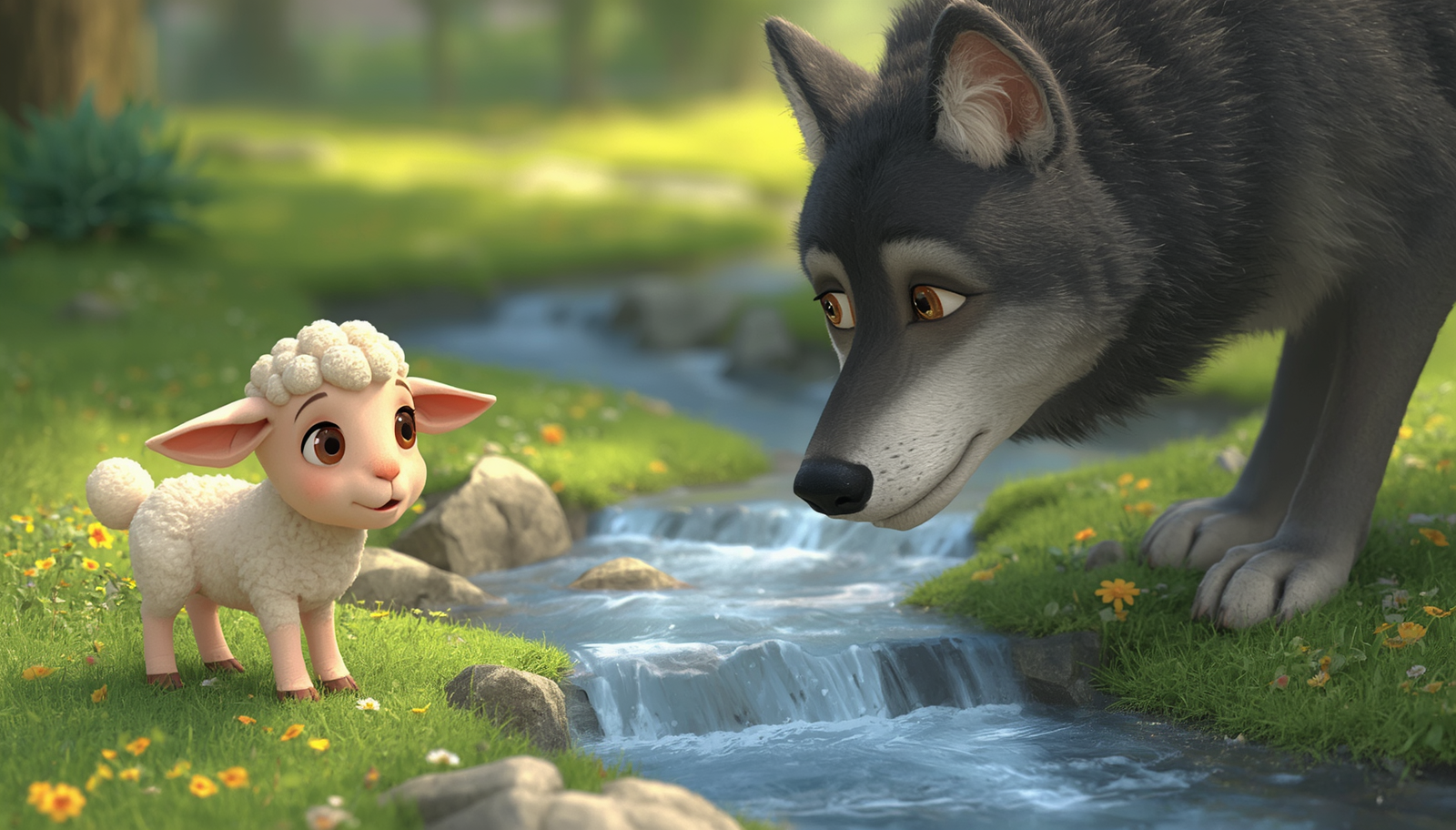
The Wolf Reveals His Real Intention
The wolf finally stopped making excuses.
“Enough!” he shouted.
“But I have done nothing wrong,” the lamb said.
The wolf replied, “It does not matter. I am hungry, and I want to eat you.”
The lamb became very afraid.
Now he understood that the wolf had never been interested in the truth. The accusations were only excuses.
The lamb had tried to answer politely and logically, but the wolf did not care.
The wolf took the helpless lamb away.
And that was the end of the story.
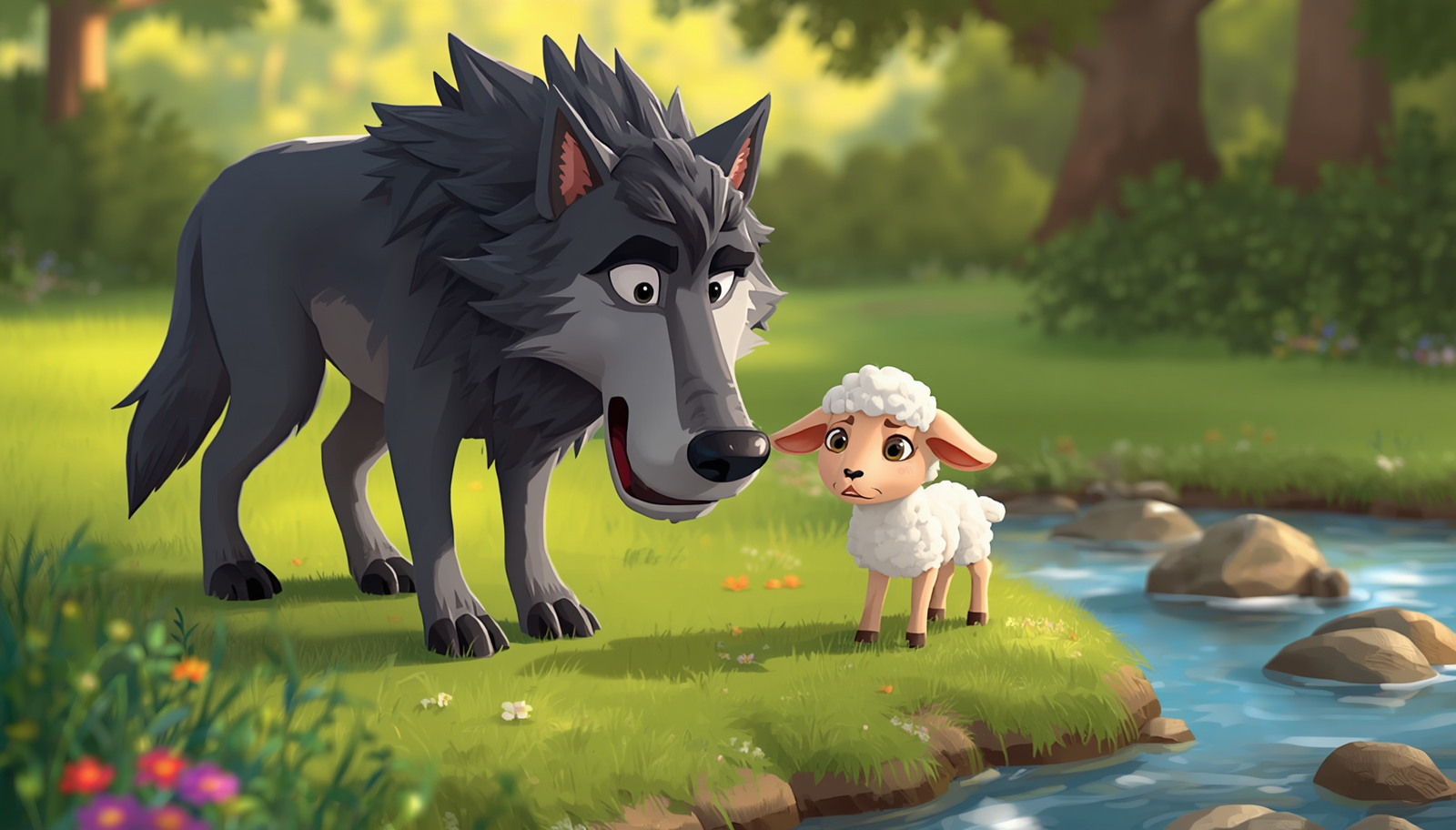
What Does the Story Teach Us?
The wolf used false accusations to make his cruel action seem reasonable. The lamb answered each accusation with the truth, but the wolf had already made his decision.
The story teaches us that arguments do not always change the mind of someone who is determined to act unfairly.
Moral of this Story
A person who wants to do something wrong may make excuses to justify it.
The story also teaches that power does not make a person right. We should listen to the truth, treat others fairly, and avoid blaming people without good reasons.
Important Lessons for Kids
- Always try to tell the truth.
- Do not blame others without knowing the facts.
- Being stronger does not mean being right.
- Do not use excuses to hide wrong actions.
- Treat weaker people with kindness and respect.
- Listen carefully before judging someone.
- Stand up for fairness when someone is being treated wrongly.
- Use your strength and abilities responsibly.
This Story Is Important for Kids
The Wolf and the Lamb is more than an animal story. It helps children understand an important part of everyday life: fairness matters.
Children may sometimes see unfair behavior at school, at home, in games, or among friends. For example, someone might blame another child for breaking something without checking what really happened.
This story encourages children to ask questions such as:
- What really happened?
- Do we have the facts?
- Are we treating everyone fairly?
English Learners Can Learn from This Story
This story is also useful for English learners and beginners because it contains simple vocabulary and natural conversations.
- wolf
- lamb
- stream
- water
- hungry
- blame
- truth
- wrong
- excuse
- fair
- kind
- afraid
The dialogue can also help students practice speaking English.
- “What are you doing here?”
- “I am drinking some water.”
- “You are making the water dirty.”
- “That is not possible.”
Questions and Answers About the Story
1. Who are the main characters in the story?
The main characters are a wolf and a lamb.
2. Why did the lamb go to the stream?
The lamb went to the stream because he was thirsty and wanted to drink water.
3. What did the wolf accuse the lamb of doing?
The wolf accused the lamb of making the water dirty.
4. How did the lamb answer the wolf’s accusation?
The lamb explained that he was downstream, so he could not make the water dirty for the wolf upstream.
5. What other accusation did the wolf make?
The wolf claimed that the lamb had spoken badly about him the previous year.
6. How did the lamb answer this accusation?
The lamb explained that he was too young at that time to have said such things.
7. Why did the wolf continue blaming the lamb?
The wolf wanted to eat the lamb, so he kept making excuses and accusations.
8. What is the main moral of the story?
The main moral is that someone who wants to do wrong may make excuses to justify unfair behavior.
Conclusion
The Wolf and the Lamb is a short but powerful fable for children. Through the conversation between a hungry wolf and an innocent lamb, the story teaches important lessons about truth, fairness, kindness, and responsible use of power.
The lamb answers the wolf honestly, but the wolf is not interested in the truth. He has already decided what he wants to do and simply creates excuses to justify his behavior.
Children can remember this lesson in their daily lives: do not judge others without facts, do not make unfair accusations, and never use your strength to hurt someone weaker.
For English learners, the story also provides simple vocabulary, useful sentences, and easy dialogue practice. Reading and discussing stories like this can make learning English both meaningful and enjoyable.
Learn More Moral Stories